

The Trump administration’s aggressive diplomatic and military engagement in the U.S.’s backyard — dubbed the Donroe Doctrine — has led to more violence in the Americas, increased impunity by local security forces, and heightened danger from cartels in the Western Hemisphere, according to a new analysis by a top violence watchdog, shared with The Intercept.
“U.S. pressure on organized crime is accelerating the spread of militarized security approaches in the region,” according to Sandra Pellegrini and Tiziano Breda, senior Latin America analysts with the Armed Conflict Location & Event Data project, known as ACLED. “Growing volatility in the organized crime ecosystem will likely fuel an increase in violence throughout the rest of Trump’s term, potentially undermining any short-term improvements achieved through hardline approaches.”
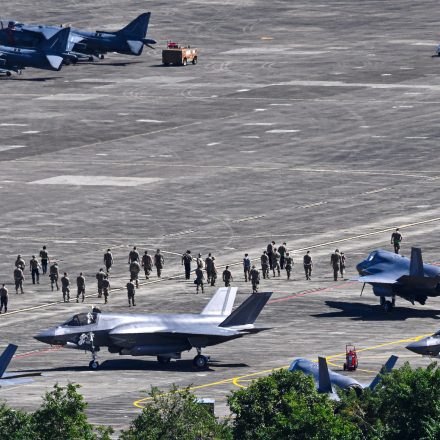
President Donald Trump has turned the Western Hemisphere into a war zone as part of what he and others have called the Donroe Doctrine. This bastardization of the 1823 Monroe Doctrine has been used to justify strikes on civilian boats in the Caribbean Sea and Pacific Ocean; an attack on Venezuela and the abduction of its president; CIA operations in Mexico; joint counter-cartel operations in Ecuador dubbed “Operation Total Extermination”; and increased military and intelligence operations elsewhere in Latin America.
“In countries where cartels’ revenue sources are most diversified, the spread of militarized security strategies has led to counterproductive results, such as group fragmentation and intensified competition,” according to the ACLED analysis. In Ecuador, the capture or killing of gang leaders has led to a proliferation of splinter groups. The reported number of gangs there increased from 24 in 2023 to 37 by the end of last year. And after José Adolfo Macías, the leader of the gang Los Choneros, was extradited to the United States, another group — Los Lobos — was able to push into its rival’s strongholds, fueling more violence, the analysts noted.
Cartels are also increasingly waging a light-footprint air war strategy, similar to the tactics employed by the U.S. military during the War on Terror and now in its boat strike campaign. Armed groups in Mexico and Colombia are employing weaponized drones to target security forces, write Pellegrini and Breda, “in an effort to maximize the impact of their attacks while minimizing the costs of a direct confrontation.” In Mexico, drone attacks by cartels have jumped 567 percent from 2023 to 2025. In Colombia, such attacks have spiked an astounding 10,600 percent, from one strike in 2023 to at least 107 in 2025.
For its part, the U.S. military’s illegal campaign of strikes on boats in the Caribbean Sea and Pacific Ocean has resulted in 59 attacks on so-called drug boats since September 2025, killing 195 civilians. The latest strike, on May 8 in the Pacific Ocean, killed three people.
Regional security forces aligned with the U.S. have also employed attacks from afar. “Forms of remote violence, namely aerial bombardments and, in the case of Haiti, the use of drones by a special task force, have exposed civilians to shelling and caused the number of people killed from clashes between security forces and gangs to skyrocket,” according to the ACLED analysts.
Pellegrini and Breda note that Trump is fostering both a “hardline response to crime across the region” and “a climate of impunity” that has led to runaway state violence. Operations by security forces reportedly killed almost 6,900 people last year, the highest total since 2018.
Under the Donroe Doctrine, the Trump administration has repeatedly bullied Panama and threatened Canada, Colombia, Greenland, and perhaps also Iceland. It has also increasingly threatened Cuba.
Last week, federal prosecutors in Florida unsealed an indictment charging former Cuban leader Raúl Castro and five others in connection with the Cuban military’s fatal downing of two planes 30 years ago. The administration has also been making claims that the tiny island nation is a military threat. Democrats in Congress have pushed back and repeatedly warned that the administration is crafting a pretext to justify an invasion.
“Look, the Cuban regime is an appalling regime, but it is no more a national security threat than Nicaragua is. It’s just insane to say that it is, and especially if it’s done in the service of military action,” said Rep. Jim Himes, D-Conn., the top Democrat on the House Intelligence Committee.
The post Trump’s ‘Donroe Doctrine’ Supercharges Violence in the Americas appeared first on The Intercept.