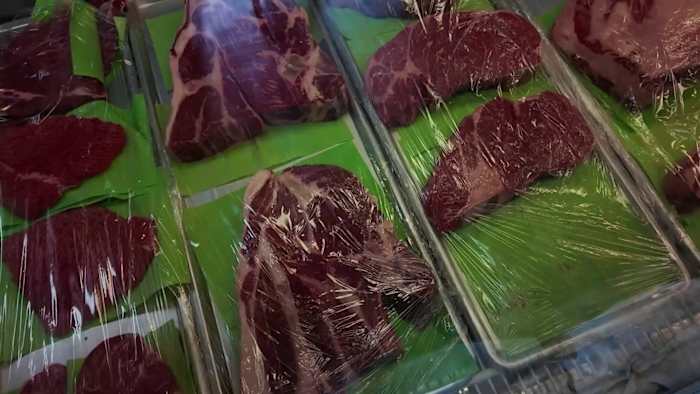
The White House is moving to bring hundreds of thousands of metric tons of imported beef into the United States at a discount, promising relief for shoppers who have watched ground beef prices climb for months. But economists and people inside the meat industry say the savings may not make it to your grocery cart.
The federal plan allows up to 300,000 metric tons of beef into the country over roughly 90 days, with tariffs waived on the imports. The White House has said importers agreed to sell the product at a 25% discount to current market prices — a figure President Trump repeated publicly. Economists, however, have expressed doubt the reduction in wholesale input costs will translate meaningfully to retail prices at checkout.
Carter Ray, owner of Wiatrek’s Meat Market in San Antonio, said the plan is more narrow than the headline numbers suggest.
“The lean trim is kind of what they’re going to import mixed with some other domestic fatty trim to make a 90-10 or 80-20 trim,” Ray said. “So like these big grind plants are going to input that lean meat. It’s not really going to affect a whole lot of retail meat markets specifically, especially us — we have our own processing facility.”
The policy targets lean beef trimmings — the component large processing plants blend with fattier domestic beef to produce standard ground beef ratios. It does not apply to steaks, roasts, briskets, or most other cuts found in a typical meat case.
Ray, who sources his beef from ranches in Wilson County through his own state-inspected facility, said the White House’s 25% price reduction target is ambitious — especially with the holidays approaching.
“It’s going to be hard, and 25% overall is going to be difficult,” he said. “Especially as we go into our holidays, Thanksgiving and Christmas, when things get a little bit more expensive because people want to have a nice piece of meat around the dinner table. So 25% is a little ambitious.”
Even if ground beef prices soften, Ray said shoppers may have a hard time knowing where their beef actually came from. Once imported trim is mixed and ground inside the United States, packaging can legally indicate the product was ground in the U.S. — even if the beef originated elsewhere.
“It’s going to be very difficult because of that gray area of kind of the mixing from domestic import,” Ray said. “I would ask. But even those guys might not know the answer because it is up the supply chain so many levels.”
The only label that guarantees an animal was born, raised, slaughtered and processed entirely in the United States is the “Product of USA” designation — but that label is voluntary under USDA rules, meaning not every package will carry it.
The National Cattlemen’s Beef Association said it was disappointed by the announcement, arguing that flooding the market with below-market foreign beef is not the right approach to rebuilding the American cattle herd, which has fallen to near a 75-year low. Cattle numbers are down an estimated 6% to 10% from last year.
Ray said he sees a potential upside if food service industries — hotels, hospitals, schools and catering operations that rely heavily on ground beef — get some cost relief. That could reduce pressure on domestic producers and give ranchers more incentive to hold onto heifers and rebuild the herd over time.
The federal import window is set to last 90 days. Shoppers looking to verify the origin of their beef are encouraged to ask their butcher directly or look for the voluntary “Product of USA” label, which USDA defines as beef from animals born, raised and processed in the United States.
Read also: