State and federal officials said Friday they are tackling the reappearance of New World screwworm in Texas, but do they have the tools to do it?
Gov. Greg Abbott announced an updated disaster declaration during a news conference, authorizing the use of all state resources to fight the reappearance of the flesh-eating parasite, which has been largely gone from the United States for decades.
Here’s what to know.
Flesh-eating larvae
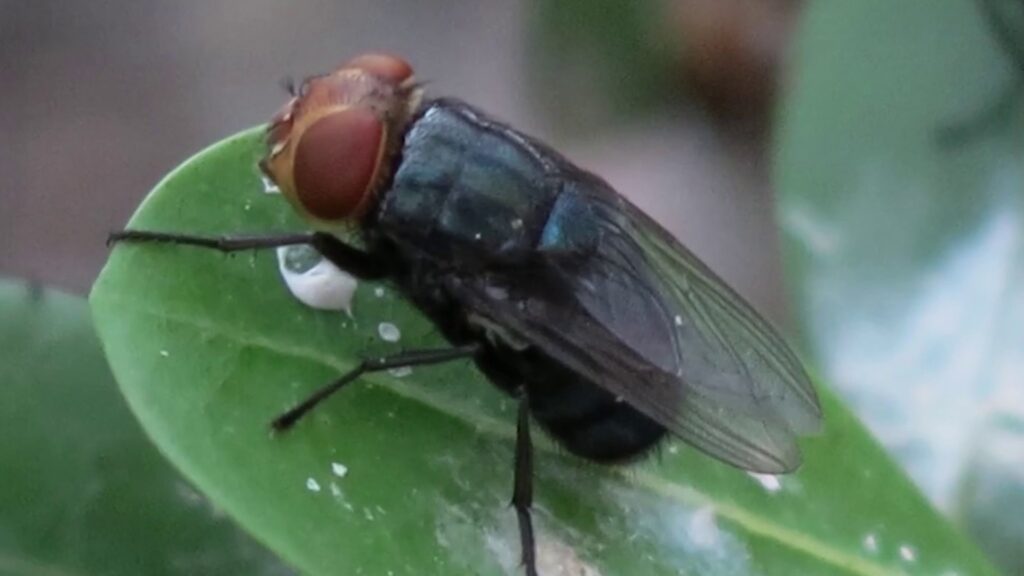
Despite the name, New World screwworms are a type of fly, not worm, which can infest warm-blooded animals like livestock, wild animals, pets, occasionally birds, and in rare cases, people.
Screwworm flies lay eggs in the wounds or body openings of warm-blooded animals. After they hatch, the larvae burrow into their hosts as they eat their flesh.
As more maggots are born and eat into the host, the wounds become larger. The parasites can cause serious, often deadly damage if they aren’t treated.
Fortunately, Texas State Veterinarian Dr. Lewis “Bud” Dinges said infestations are “highly treatable.”
“We have many tools in our toolkit today to prevent devastating impacts that we didn’t have before,” Dinges said during Friday’s news conference.
1 case so far
The U.S. Department of Agriculture confirmed a screwworm infestation case in La Pryor in Zavala County, roughly 100 miles southwest of San Antonio and 50 miles from the U.S.-Mexico border.
Larvae were identified in the umbilical area of a three-week-old calf, which Dinges said is now doing well and its navel wound is “healing nicely.”
“The herd has been inspected for additional infestations. There have been none,” Dinges said.
The USDA has set up an online dashboard to track the number of cases and detections through fly traps.
Dinges said despite the confirmed case in the calf, they haven’t found any flies in the traps yet.
Longtime gone
The fly was an annual warm-weather scourge of cattle ranchers from at least the 1930s through the 1960s, until the U.S. eradicated the pest by breeding sterile male flies and dropping swarms of them from planes to mate with wild females.
The United States was declared free of indigenous screwworms in 1966, though there were still outbreaks into the 1970s. According to the USDA, the last case of screwworm was reported in 1982, and “only a handful of imported cases have been reported since then.”
The USDA said sterile insect techniques also helped eliminate an outbreak from the Florida Keys in 2017.
The deadly flies were detected in Mexico late in 2024, after years of containment at the southern end of Panama.
Quarantine zone
A 12-mile quarantine area has been set up around the detection area in La Pryor, and no warm-blooded animals are allowed out without being inspected.
When Texas previously faced screwworms, the flies moved extensively because humans put animals into vehicles and ”drove them great many miles,” said Prof. Phillip Kaufman, the head of the Texas A&M University Department of Entomology.
“If we can stop that, we have a much better chance of keeping this infestation — and even eliminating this initial infestation — our chances increase considerably.”
More sterile flies needed
Since female screwworm flies normally mate just once, the release of sterile male flies can drive down the population.
The question is now whether there are enough?
Assistant Surgeon General Michael Schmoyer, who is also the head of the USDA’s New World Screwworm Directorate, said it took about 500 million flies each week when the screwworms were driven out of the U.S. and through Mexico and Central America in the latter part of the 20th century.
The U.S. currently has just one joint facility with the Panamanian government, producing about 100 million sterile flies each week.
Another facility in Mexico could open this summer that is expected to produce an additional 60 million to 100 million flies.
The USDA also partnered with the U.S. Army Corps of Engineers to build a facility in South Texas, which Schmoyer described as the size of two Costco’s.
However, Schmoyer said the facility is not expected to reach its phase one levels of production — 100 million flies per week — until November 2027, with it hitting its full, 300 million fly-capacity in 2028.
Abbott said a high volume of flies are needed as quickly as possible and pushed for the Texas facility to be finished by May 2027, offering “any and all assets and resources by the state of Texas to accelerate the completion of that construction project.”
“Here’s a reality about the cycle of this,” Abbott said,“ and that is this is likely to spread over the course of the summer. During winter months, it may kill off the flies or reduce their number. We cannot make it through a second summer.”
Schmoyer said over 130 million flies have been released in Texas since January, and they “use the science” to determine the best place to disperse them.
He also pointed to the more than $700 million worth of applications the USDA received in response to a $100 million “grand challenge” it issued for projects to fight screwworms.
“It took 500 million in the past,” Schmoyer said of the sterile flies. “We are looking at building up to that number, but we’re also using science and technology and innovation to do whatever we can to make the best use of the flies that we have and hopefully decrease that number.”
Food safety
Officials stressed screwworms are a “food production issue” and “not a food safety issue.”
The insects do not infest meat, fruit, vegetables, or other food sources.
What you can do
- Check for and treat wounds on your animals — even small ones like tick bites — to keep the flies out
- Report any suspected cases
- Texas Animal Health Commission: (800) 550-8242
- Texas Parks & Wildlife: (512) 389-4505
The Associated Press contributed to this report.
Read more: