Voters across the country reject data centers
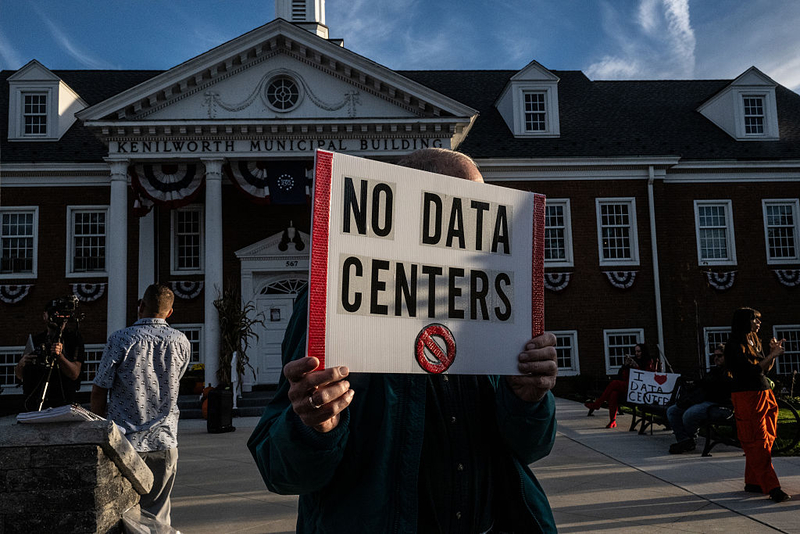
People participate in a protest against the CoreWeave AI data center outside the municipal building on October 21, 2026, in Kenilworth. New Jersey. (Photo by Stephanie Keith/Getty Images)
In local elections across the country, Americans voted overwhelmingly to restrict the buildout of data centers in their communities.
Late Tuesday evening, 33 ballot measures to restrict data centers were passed by voters or were leading in ongoing vote counts, according to the tracking website Data Centers on the Ballot. Roughly a dozen similar measures were on the ballot in communities where vote totals had not yet been announced.
The measures included outright prohibitions, temporary moratoriums, limitations on energy use, mandating voter approval before construction and advisory measures urging local officials to restrict data centers.
Only one measure, in North Dakota, resulted in a victory for voters who supported the construction of data centers.
The national backlash to data centers has become a major political issue. Residents in Republican and Democratic cities alike have pushed back on tech companies’ plans to aggressively build data centers to power their artificial intelligence platforms. Local and national activists have raised concerns about energy costs, pollution, water use, noise and conversion of farmland and other open spaces.
According to an NBC exit poll, 56% of voters said AI and data centers played a “crucial or major factor” in their vote for Congress.
In some communities, including 21 municipalities in Ohio, residents turned to local ballot measures or referendums in an effort to block the construction of proposed data centers. In nearly every result so far, voters overwhelmingly backed new restrictions or declined to approve measures that affirmed the buildout of such facilities.
Conserve Ohio, a campaign seeking to block data center development, worked with leaders in many of those communities to help draft ballot language.
“It’s one of the most beautiful things I’ve ever seen, people coming together across communities, putting partisan differences aside and uniting (to oppose data centers),” Nick Owens, an attorney with the group, told Stateline last month.
A poll published by UMass Amherst earlier this year found that only 11% of Americans would support the construction of an AI data center in their community.
Stateline reporter Alex Brown can be reached at abrown@stateline.org
SUPPORT: YOU MAKE OUR WORK POSSIBLE
Originally published by
Stateline.
Read the original article