


In July 2020, Aluf Benn, the editor of the Israeli newspaper Haaretz, interviewed a 92-year-old retired Hebrew University professor named Yehezkel Dror. Benn described him as the “doyen of public policy experts in Israel.” For his part, Dror fashioned himself after Herman Kahn, the American defense intellectual who made his name by “thinking the unthinkable” — how to fight a thermonuclear war. In 2005, Dror’s work on policy planning and strategic thinking won him the coveted Israel Prize.
Dror responded to Benn’s questions as a futurologist with knowledge of what is to come, gained by thinking rationally and ruthlessly about a world too complex for all but an elite class of geniuses. Complimenting Israeli leaders for expelling as many Palestinians from the country as they did in 1948, Dror insisted on the correctness of his plan for an Israeli attack on Iran and praised President Donald Trump’s 2020 Israeli-Palestinian peace plan — the so-called Deal of the Century. He also called for a world government run by modern philosopher kings, and in his 2020 book, “Steering Human Evolution,” he advocated settling a thousand fertile couples on Mars to ensure the human race would not become extinct.
Dror explained the tension in his thinking between rationalist universalism and a tribalist commitment to his own group, the Jews. Citing Zionism as the “core meaning of his life,” Dror emphasized the contribution he had made to “a total revolution in the history of the Jewish people, on the path from Holocaust to resurgence.” The primacy of this latter commitment is clearly apparent in his book “Crazy States: A Counterconventional Strategic Problem,” published in 1971.
The topic of “craziness” as a descriptor of states was a familiar one in the 1960s when discussing nuclear deterrence. Academics Thomas Schelling and Herman Kahn both explored how a state with a reputation for craziness could increase the credibility of otherwise unconvincing threats.
The thrust of Dror’s book was different. Dror imagined how states with powerful modern weapons might act in ways radically contrary to accepted norms or expected calculations. Normal states would need to act differently toward adversaries deemed “crazy” by shifting strategies from deterrence and self-defense to destruction and preemptive attack. The not-so-hidden subtext of the argument was to brand all of Israel’s adversaries as “crazy,” thereby establishing justification for using any and all means, including subversion, preventive war, and even annihilation, against them.
Dror went on to lay out the criterion for labeling states — Israel’s enemies — as “crazy.” Fifty years later, however, Dror’s account of craziness and the warning signs he suggested looking for apply more readily to Israel than to its Arab enemies.
“Crazy” Characteristics
Dror never defined precisely what he meant by “crazy,” preferring to list behaviors, practices, and beliefs associated with his image of craziness. His prototypical case, used repeatedly for illustration of his argument, was Nazi Germany. Dror began his book by offering the Third Reich to skeptical readers “as a striking and radical demonstration of the possibility of crazy states and their implications for the international order and the security of various countries.” The case study also made the point that nonstate movements or organizations, such as Hitler’s National Socialist Party, could be treated as crazy as well as states. This justified Dror’s inclusion of various Palestinian movements and groups affiliated with the Palestine Liberation Organization as “crazy” even though they weren’t states.
At the end of 1973, an Israeli military publishing house issued a Hebrew edition of Dror’s book with a new chapter, “The Question of ‘Crazy’ States and the State of Israel.” Written against the backdrop of the October 1973 Arab-Israeli War, known in Israel as the Yom Kippur War, Dror described virtually all Arab states and movements, whether Muslim or Palestinian, as either crazy, partially crazy, or liable to become crazy. According to Dror, the purpose of this chapter — which never appeared in English — was to shape Israeli military doctrine and strategies to deal with the craziness and potential for “extreme craziness” of Israel’s adversaries.
Dror emphasized that the kind of craziness he had in mind — so dangerous to the world community that no measures to disrupt or destroy it should be ruled out — requires an ability to think clearly, plan systematically, and act effectively. In doing so, he was carefully distinguishing irrationality from craziness. To be classified as crazy, a state or movement must not only have the means to project its power with devastating effect; it must also demonstrate a capacity for calculated action so that it can learn from mistakes and devise better and more successful techniques for achieving its (crazy) purposes.
Using Dror’s measures, we can ask whether Israel itself is crazy. If it is, then for Israel’s Lobby to be successful, U.S. policies toward Israel and the Middle East must themselves be crazy.
A useful list of the features Dror set forth to identify a crazy state appeared in a positive review of his book: aggressive pursuit of far-reaching goals harmful to others; radical and intense commitments to achieve those goals; and adoption of a morally superior posture even while grossly contradicting international norms, both ethical and legal.
Using these measures — goals, means, and public posture — we can ask whether Israel itself is crazy. If it is, then for Israel’s Lobby to be successful, U.S. policies toward Israel and the Middle East must themselves be crazy and therefore dangerous to American interests and to the world.
Hard-Right Turn
Israeli politics revolve around its party system. That system has undergone two fundamental transformations: from one-party dominance to an even rivalry between two parties and then a return to dominance by the former opposition party. For almost three decades, the social democratic Labor Party dominated Israeli elections, with the right-wing parties in opposition. While never securing a majority of seats, in the 1960s and 1970s, Labor’s parliamentary dominance was enough to relegate Menachem Begin’s right-wing Herut (Freedom) Party to the political wilderness.
As David Ben-Gurion, Israel’s first and until Netanyahu longest-serving prime minister, frequently declared, Labor would accept any party as a coalition partner except those occupying the extremes of the political spectrum: the communists and Herut. Begin, he once wrote, was “a Hitlerist type: a racist, willing to destroy all the Arabs for the sake of Greater Israel.”
After the June 1967 Arab-Israeli war, known as the Six Day War, the Labor Party favored withdrawal from occupied Palestinian territories in return for peace, though it avoided specifying what territories could be relinquished or under what circumstances. The party that Begin led in 1967 was Gahal, a combination of Herut and the Liberal Party. In 1973, it became the cornerstone of the Likud. Like Herut, Gahal and then Likud opposed territorial withdrawal from any part of the West Bank and Gaza. The right wingers rejected the principle of trading land for peace, favored settlement of Jews throughout the territories, and looked forward to their permanent absorption into the State of Israel.
The “earthquake,” Likud’s victory in the 1977 elections, temporarily ended single-party dominance in Israel. Subsequently, two rival blocs — one led by the Likud and the other by one or another version of the Labor Party — battled each other in seesaw fashion. But since the 2013 elections, the right-wing bloc, with the Likud forming the core of governing coalitions, has dominated Israeli politics.
The sharpness of Israel’s shift to the right is evident in the changing ideological complexion of members of its 120-seat parliament, the Knesset. Israeli parties have always differed on a variety of social and economic questions. But by far the two most important markers of a party’s location on the spectrum of Israeli politics are its position on Israel’s borders and the intensity of its commitment to an exclusivist Jewish mission for the state.
Border Wars
Before the 1967 war, the issue of the country’s borders was not particularly salient in Israeli politics. Occupation of the West Bank and Gaza Strip reopened the question of expanding the state’s boundaries, polarizing the political system, and triggering a sharp rise in both hawkish and dovish positions on these questions. After the Six-Day War, average left-wing representation in the Knesset increased by approximately two-thirds compared to what it was before 1967. Right-wing representation in the Knesset, however, tripled.
In the 2000s, the right-wing bloc’s representation has grown rapidly, while the left-wing bloc has shrunk drastically. Since the 2003 election, the first following the second Palestinian uprising, or Intifada, average representation of right-wing views has been twice that associated with the left. In the most recent elections, actual majorities of Knesset members have been affiliated with political programs advanced before 1967 only by a small and extreme minority. Meanwhile, the number of Knesset members espousing concessions capable of attracting even minimal Palestinian interest has dwindled.
Following the 2022 election, 63 members of the Knesset identified with what were originally seen as extreme far-right views on the nation’s borders, while only 14 supported a two-state solution. Of the latter, 10 were Arabs and only four were Jews.
Israeli public opinion has also shifted strongly toward the extreme right. Intensive polling done between 2022 and 2024 showed that four to five times as many Jewish Israelis identified themselves as “right-wing” than as “left-wing.” The rightward shift is more extreme than it seems from this data because what it means to be yemini, or right wing, has itself changed. Much more than in the past, it is associated with commitments to overt discrimination against Palestinian citizens, annexation measures that would exclude Palestinians from citizenship, use of extrajudicial punishment against Arabs, and preference for military action over negotiation for advancing Israeli interests in the region.
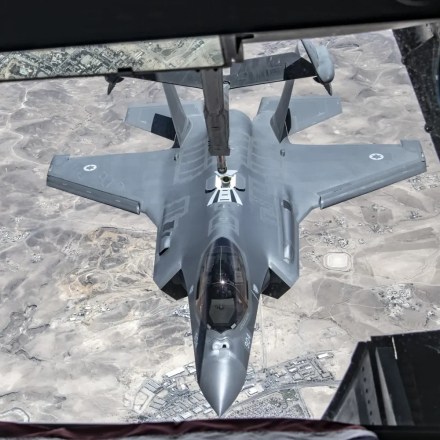
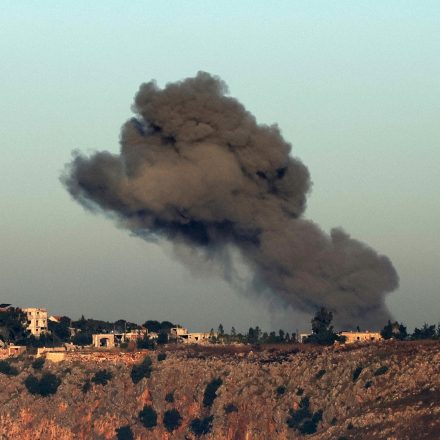
Along with the rightward extremization of the Jewish public has been an escalating propensity for Israeli leaders to aggressively pursue expansive goals. This hawkishness manifested as military actions, assassinations, and spectacular acts of sabotage — from the West Bank and Gaza to Lebanon, Syria, Iraq, Yemen, Qatar, and Iran — that have stunned the world.
Rise of a Madman
In the 1990s, Benjamin Netanyahu began his rise to power, not as a right-wing firebrand but as a silver-tongued defender of Israel against international criticism. He coupled strong right-wing views with opportunism and an aversion to making risky decisions. Having climbed the greasy pole to take control of the Likud Party in 1996, Netanyahu went on to become Israel’s longest-serving prime minister.
Following Hamas’s attack on Israel on October 7, 2023, however, Netanyahu’s modus operandi changed. Two of his most crucial judgments — that the Gaza Strip could be kept indefinitely in a state of economic immiseration and that Hamas would not mount a large-scale attack — pushed Israelis into one of the most severe shocks they ever experienced.
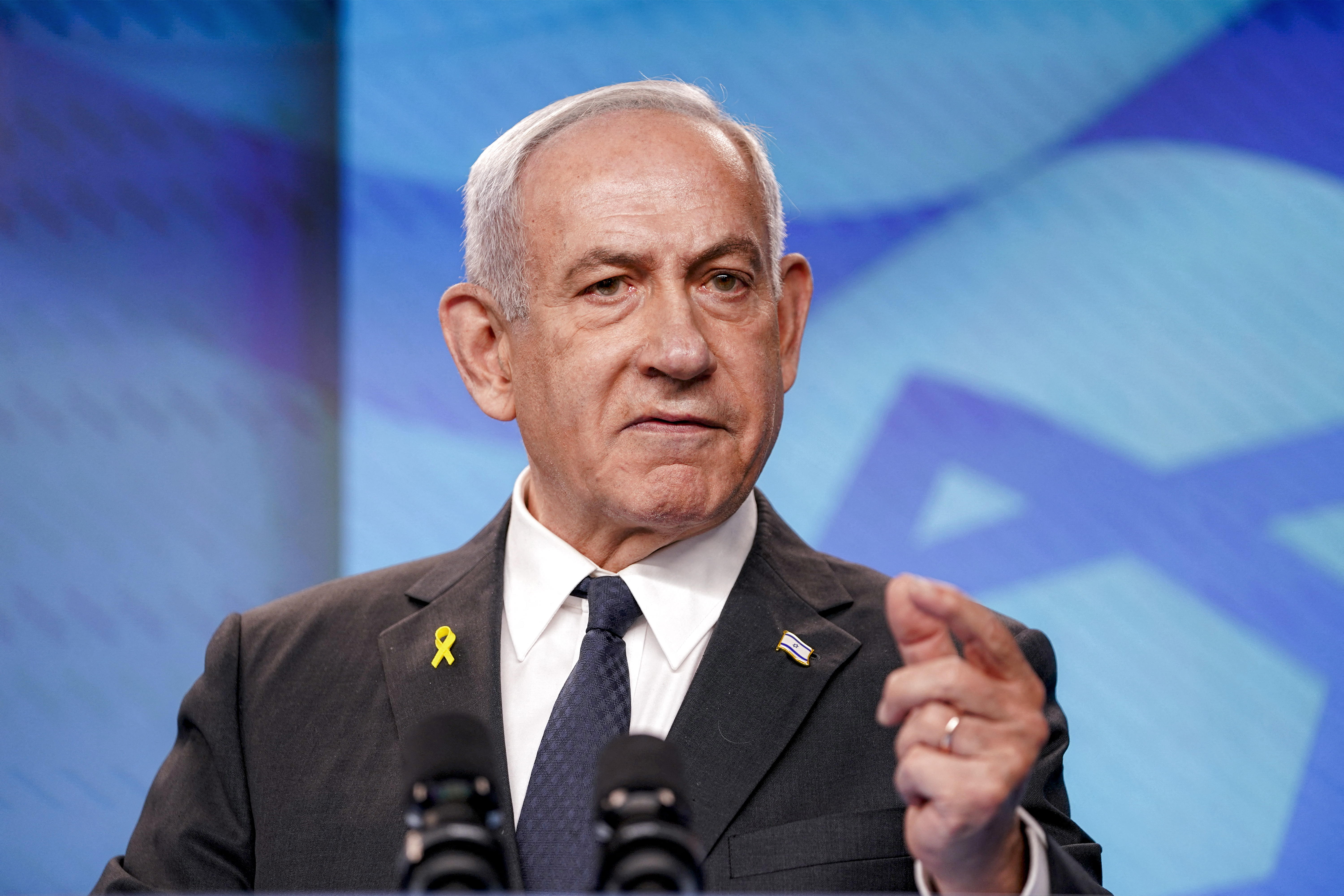
Fearing investigation of his failure to protect the country, Netanyahu transformed himself into the epitome of Israeli craziness.
The levels of violence he authorized against Palestinians in Gaza shocked the world. Netanyahu’s endorsement of transferring the entire population of Gaza out of Palestine; the bloody attacks he unleashed against Hezbollah and civilian neighborhoods in Lebanon; the wars he launched against Iran; and his attempt to assassinate Hamas negotiators in Qatar all reflect much more far-reaching goals for Israel than those of recognition, peace, and security, as one nation among others in a stable Middle East.
In this way, Netanyahu is not just following in the footsteps of predecessors, who were prepared to take risks for ambitious gains; instead, he has made the craziness that has occasionally marked Israeli policies into a dominant trait.
A 21st Century Sparta
Efraim Inbar is among Israel’s most influential national security analysts. The founder and director of the Jerusalem Institute for Strategic Studies, Inbar has reliably indexed the policy preferences of Likud governments, in general, and those led by Netanyahu in particular.
From year to year, problem to problem, threat to threat, Inbar’s recommendation has almost always been the same: reject available compromises, accept international isolation, and use preemptive war to inflict more pain and damage on adversaries than they are willing to tolerate.
“Fortunately,” he wrote in response to questions about Israel’s long-term goals, “Jewish history presents the Zionist movement another alternative: the Davidic option of building a Jewish commonwealth in the midst of an idolatrous world. The House of David ruled the Land of Israel for over four hundred years, playing a balance of power politics in our region.”
As if channeling Inbar’s thinking, Netanyahu gave a speech in September 2025 calling for Israel to expect and accept international isolation, adapt its economy toward autarchy, and see itself as a 21st century Sparta.
Netanyahu is not just following in the footsteps of predecessors; he has made the craziness that has occasionally marked Israeli policies into a dominant trait.
Israelis are familiar with the Jerusalem syndrome, a tendency for susceptible people visiting the country to experience delusional psychoses with religious or apocalyptic themes. It is also true that spectacular visions — of an unfolding, divinely guided, and Israel-centric redemption process; of the settlement in the West Bank as a crucial step in the bringing of the Messiah; and of Jewish rule over virtually the entire Fertile Crescent — have long animated the private thinking of the architects behind the vast settlement project in the occupied territories.
The Israeli Mainstream
What is striking is that such thinking has moved from the private worlds of dedicated activists, from the margins of respectable political discourse toward the center of Israeli politics. Ministers Itamar Ben-Gvir and Bezalel Smotrich both advocate for the rebuilding of the ancient Jewish Temple in the Old City of Jerusalem. Daniella Weiss, Ben-Gvir, and many others have called for the entire Gaza Strip to be emptied of Palestinians and resettled by Jews. What were, in the 1960s and 1970s, the outlandish ambitions of some marginal intellectuals, extreme rabbis, and retired generals are now the goals pursued by leading government ministers, senior security service officials, and settlement leaders.
Such grandiose ideas provide no guidelines for practical strategic thinking about Israel’s future or rationales for creative diplomacy. The result is that Israeli leaders focus on imminent security threats and diplomatic challenges, but neither entertain nor pursue longterm goals. That is to say: Those who govern Israel imagine no stable future that is both satisfying and possible enough to shape policy decisions and actions. The goal of Israel’s foreign and security policies therefore becomes simple if outlandish: to establish itself as the regional hegemon, possessing the only nuclear arsenal in the Middle East, equipped with sufficient conventional military power to operate throughout the region at minimal risk, and poised to crush any combination of opponents.
This region-shaping ambition was evident in Israel’s June 2025 attack on Iran. An Israeli military poster, in Farsi, of what Israel dubbed “Operation Rising Lion” featured a majestic lion on his hind legs next to a brightly shining sun, symbols of ancient Persia.
The idea of transforming the Islamic Republic of Iran, a Muslim-majority country of 93 million, into an ally and returning it to a non-Islamic imperial past was advanced in an Instagram post two weeks into the war by Sara Netanyahu, the prime minister’s influential wife. It depicted two lions leaning against each other and gazing into the future, one wrapped in the flag of Israel, the other in the flag of the Pahlavis, the last shahs of Iran.
Amid Israel’s bombardment of Iran in July 2025, before the U.S. joined the war, the grand scale of such ambitions — consistent with the unattainability of the goals crazy states set for themselves — became apparent during remarks Netanyahu made to an Israeli interviewer. “We are changing — and I said this on the second day of the [Gaza] war — I said that we’re changing the face of the Middle East,” Netanyahu said calmly. “And now I say to you and also to our viewers: We’re changing the face of the world. I have determined that we will achieve all our goals.”
Adapted from “Israel’s Lobby: America in the Grip of a Foreign Power” by Eli Clifton and Ian Lustick. Copyright 2026 by Eli Clifton and Ian Lustick. Reprinted by permission of One Signal Publishers, a division of Simon & Schuster, LLC.
The post Israel Justified Its Wars by Calling Enemies “Crazy.” Now, the Warning Signs All Apply to Israel. appeared first on The Intercept.