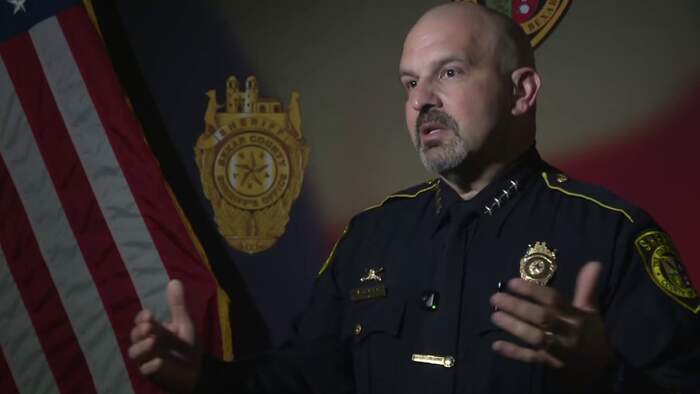
When law enforcement receives a report of a possible weapon at a school, Bexar County Sheriff Javier Salazar said deputies cannot afford to assume the situation is under control before they have accounted for every potential threat.
That philosophy shaped the Bexar County Sheriff’s Office response to Tuesday’s incident at Pieper High School, where students and staff were placed on lockdown after reports of a possible weapon on campus.
Salazar said supervisors responding to the incident determined that it should be treated as a potential active shooter situation because they could not immediately rule out an ongoing threat.
“Anytime there’s any sorts of uncertainties with the school involving weapons, we’re going to overreact versus underreact,” Salazar told KSAT.
The sheriff said that approach is reinforced through training designed to prepare officers for situations in which the information available at the beginning of an emergency may not tell the entire story.
Training prepares deputies for uncertainty
The Texas Commission on Law Enforcement mandates a 16-hour course for officers, Salazar said. The training includes classroom instruction and practical, scenario-based exercises that put officers in different roles, including first responders, victims and attackers.
Salazar added the exercises demonstrate how quickly a situation can change and why officers must continue assessing what is happening around them.
“It’s reality-based training, and it’s taught to show you that not everything is all as it may seem,” Salazar mentioned.
The sheriff said he completed the training alongside members of his command staff and administrative personnel, rather than leaving it exclusively to patrol deputies. He said his department leadership was preparing to repeat the training as the next training deadline approached.
Salazar also described state-mandated opportunities for agencies to meet and train together. He said BCSO has hosted sessions to show surrounding law enforcement agencies what resources it can provide during a major incident and to discuss how agencies can work together. The goal, he said, is to help officers understand what to expect when another agency requests assistance.
Lessons from Uvalde remain part of the discussion
The May 2022 shooting at Robb Elementary School in Uvalde, where 19 children and two teachers were killed, remains a significant reference point for Salazar when discussing law enforcement’s responsibility during a school emergency.
Salazar said the incident reinforced his belief that officers arriving at the scene must act without waiting for a higher-ranking official to take charge. He said officers must be prepared to confront a threat, even when doing so puts them in danger.
“A second grader is not trained for that,” Salazar said. “So it’s our job to go in and take those hits to avoid children taking those hits.”
Salazar did not identify a specific written BCSO policy that was newly adopted because of Uvalde. He said, however, that the department examines major critical incidents to determine what lessons can be applied to its own operations.
BCSO and Precinct 3 disagree over the response
The response at Pieper High School also raised questions about how different law enforcement agencies coordinate when they arrive at the same emergency.
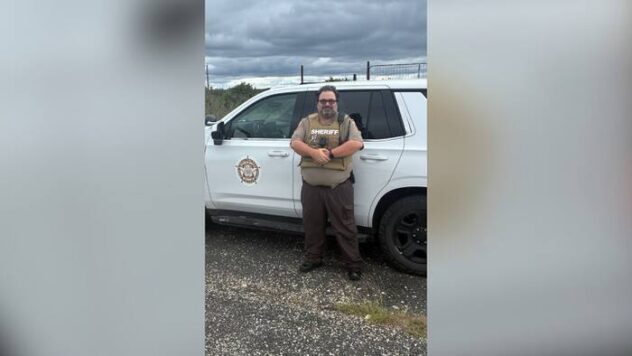
Precinct 3 Constable Mark Vojvodich said his office has an interlocal agreement with Comal ISD designating it as the district’s primary responding agency.
Vojvodich said Precinct 3 deputies were already in the area on an unrelated call when they received information about the incident. He said his deputies arrived first, located the airsoft gun and detained two juveniles before BCSO patrol officers arrived.
The constable maintains that his office had addressed the threat and that BCSO’s decision to conduct an additional interior search with dozens of officers in tactical gear was unnecessary.
Salazar told KSAT he refuses to tell another law enforcement leader how to do his job and said he expected the same professional courtesy in return.
The sheriff said BCSO will conduct an after-action review, involving department leadership and personnel who responded to the incident. The review will examine where deputies performed well and where procedures could be improved.
“Although I think overall, we did a great job,” Salazar said. “Obviously, there’s always room for improvement.”
The sheriff said BCSO remains available to assist school districts with safety planning and to share resources when requested.
He also emphasized the importance of civilian preparedness during an active shooter emergency, pointing to the principles taught through Civilian Response to Active Shooter Events, or CRASE.
The approach is summarized in three steps: avoid, deny and defend.
People should leave the area if they can do so safely, secure themselves in a protected location if escape is not possible, and defend themselves as a last resort if confronted by an attacker.
For Salazar, preparation means accounting for what could go wrong before officers conclude an incident is over. He said he would rather deploy more officers than risk having too few when a potential threat turns out to be real.
Constable Vojvodich told KSAT his office will send out a thorough incident report outlining the agency’s response efforts from Tuesday morning.
Read also: