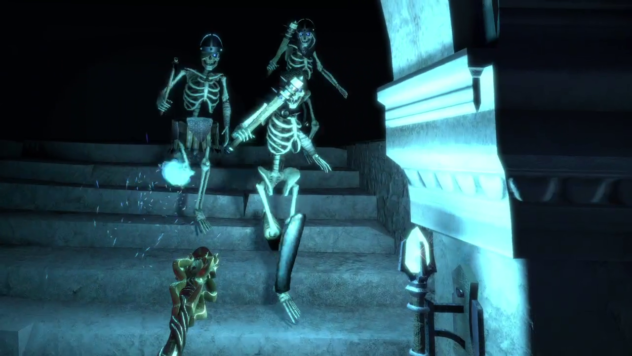
The Castle is a dungeon-themed immersive VR experience built to teach electrical concepts through a series of escape-style challenges. I played through The Castle at the Augmented World Expo and spoke to developer Chameleon Studios about its goal to gamify STEM learning through virtual reality.
In The Castle, users take on the role of an apprentice to Nigel Kupferman, a retired baron who was obsessed with Mary Shelley’s Frankenstein and went as far as purchasing the actual castle to reenact the infamous experiment.
0:00
As explained by Chameleon Studios Managing Director, Cecil Colvin, the amount of power that would’ve been required to bring life to Frankenstein’s monster would’ve blown out everything in the castle. The Castle starts the apprentice just after that blowout. It plays out as a series of story-driven tasks, but unlike a traditional game, Kupferman narrates directions on how to make repairs and explains the physics behind it all.
The exhibition floor where I did this was very loud and I did not have headphones available, so Colvin and another booth attendant filled in Kupferman’s lines for me. Signs on the dungeon walls lay out the tasks required to complete each room’s challenge and proceed to the next one. This included setting amperages, taking measurements, connecting batteries, locating and replacing blown fuses, and other hands-on activities.
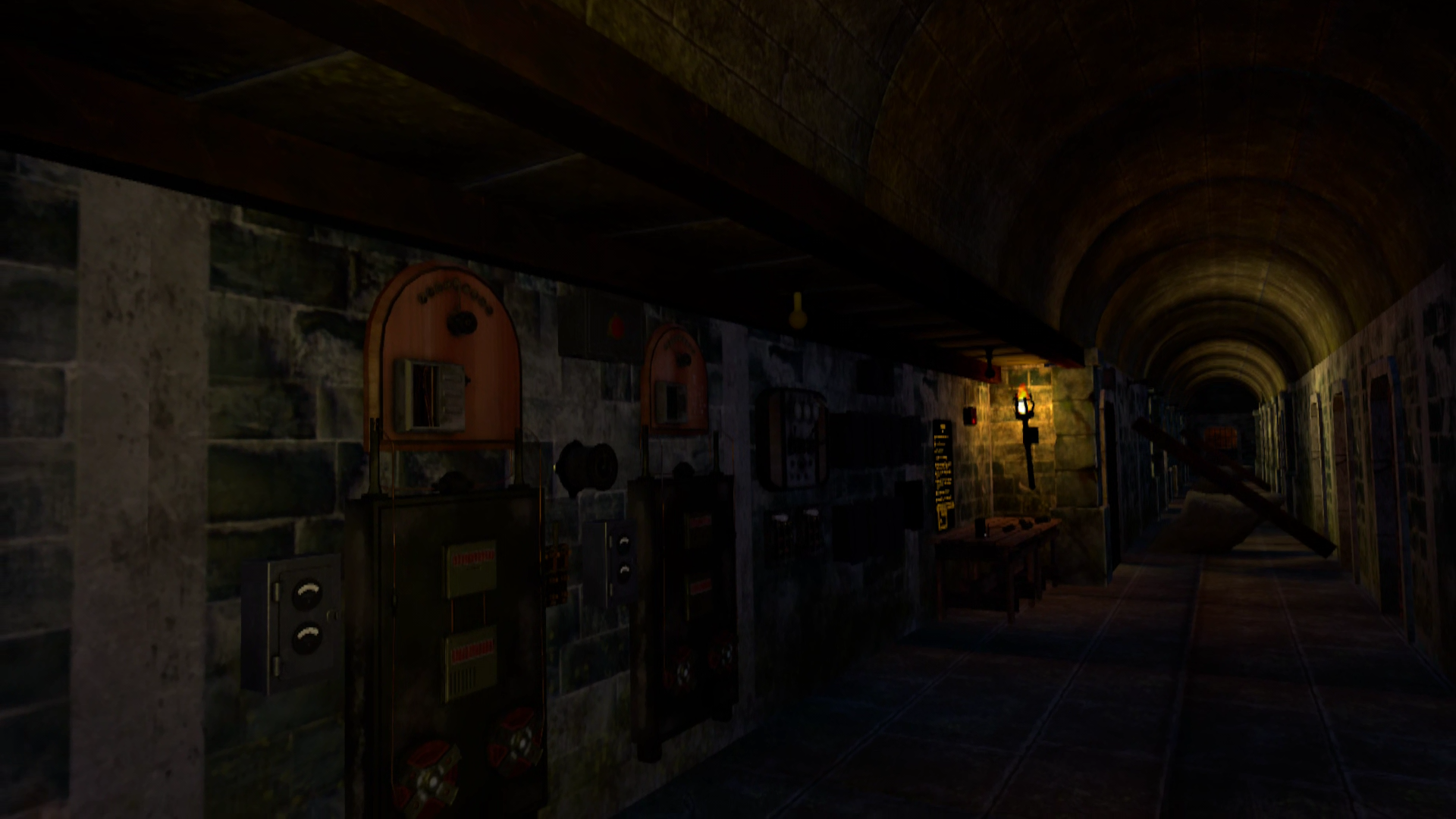
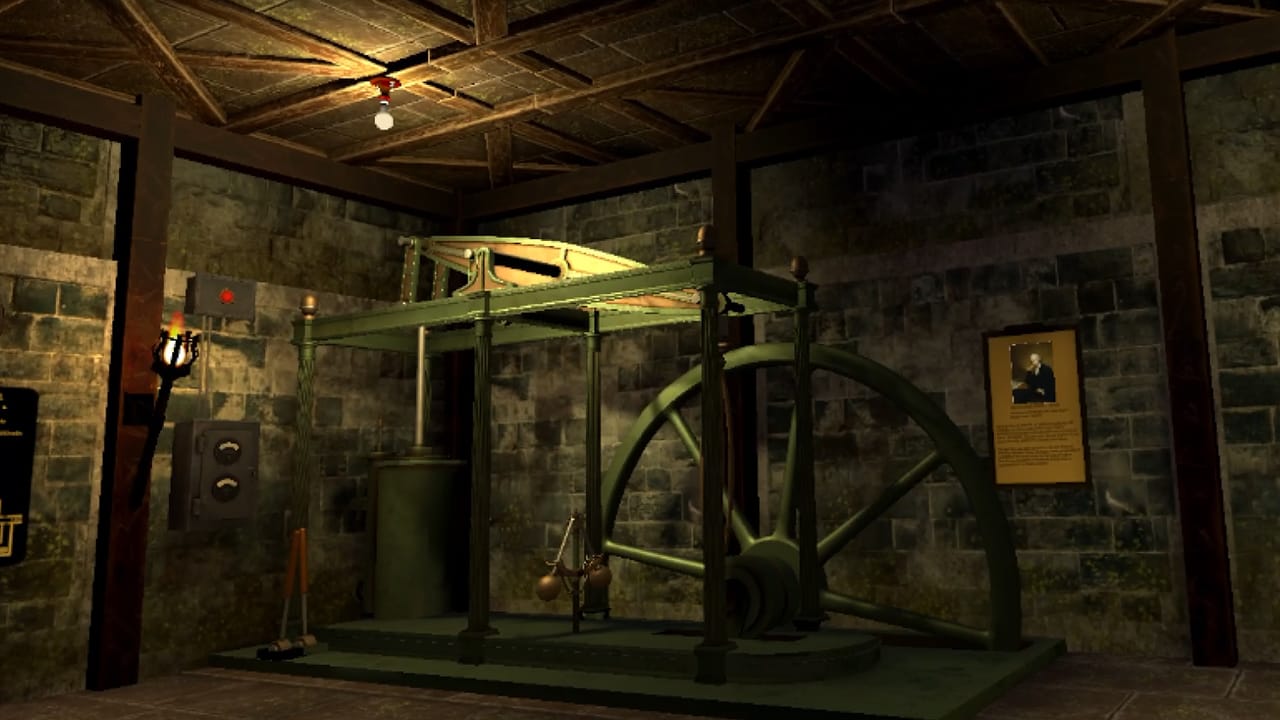
It only took about 15 minutes to complete the dungeon, but this was not meant to be a challenging experience. Education was first and foremost and that was evident in the level design and the simplicity of the controls. There was no inventory system and no controls to memorize other than basic VR locomotion and grabbing objects. Anything more complicated than that, like taking measurements, was a straightforward button press that was clearly explained.
This section, titled The Basement, was just the first of four planned levels that increase in complexity as the user progresses. Colvin also mentioned the possibility of ulterior motives behind Kupferman’s directions, keeping the narrative underscoring the instruction.
The Castle is remarkably well made. I could imagine a later version that takes away the guardrails and tests the user’s retention of the knowledge because the physical actions required to complete each room are intuitive if the science behind it is understood. Taking this approach distills what can be complex physics concepts into immersive, tactile experiments that turn theory into action. For those like me, who learn by doing instead of reading or listening, applications like this could be tremendously useful in the education sector.
You can learn more about The Castle and Chameleon Studios on its website.