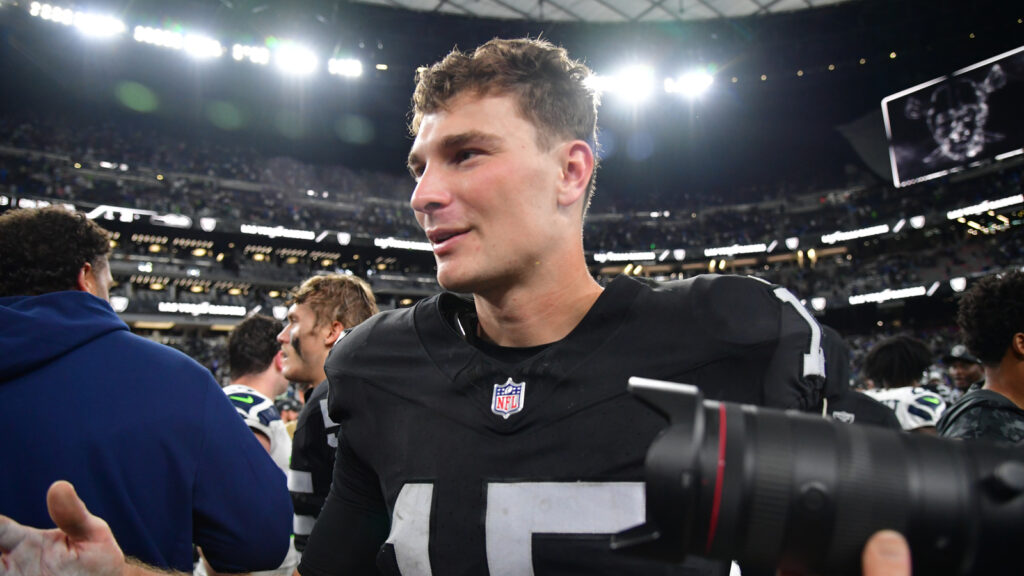

Fernando Mendoza showed promise in a 21-13 loss to Seattle. Now the Las Vegas Raiders head to Denver with the same problems and a thin offense.
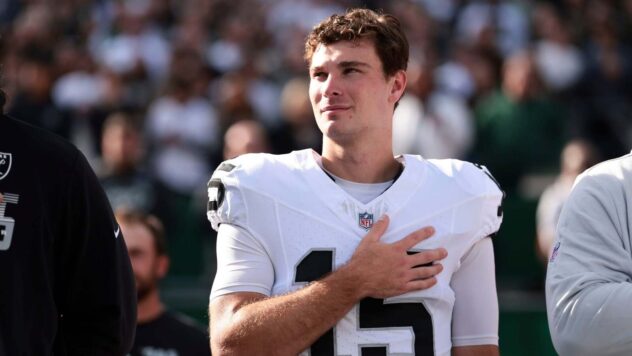
The Las Vegas Raiders lost 21-13 to the Seattle Seahawks on Sunday in a game that split cleanly into two halves. Rookie quarterback Fernando Mendoza looked comfortable early, leading an opening touchdown drive that he capped with a 10-yard run. The Raiders took a 10-7 lead into halftime.
Then tight end Brock Bowers left with an ankle injury, the Seahawks adjusted and the offense went quiet. Seattle scored 14 points in the third quarter, and the Raiders managed only a late field goal the rest of the way. The final score was closer than the second half felt.
That sequence defined Mendoza’s first start. It also served as a reminder of the issues that have limited the offense for weeks.
Fernando Mendoza makes his debut…
Mendoza finished 17 of 29 for 143 yards with no touchdowns and no interceptions. He added 22 yards on six carries, including the 10-yard score that gave the Raiders their early lead. He completed his first several passes cleanly and moved the ball without forcing throws. Against a Seahawks defense that ranks among the league’s best, he protected the football and showed the arm and legs that made him the No. 1 pick. The first half was encouraging, but the second half showed the work still ahead.
That work began with pass protection. Mendoza was sacked six times. Some of those came when he failed to pick up a blitzing cornerback in his pre-snap reads, and others came when the protection broke down in front of him. Once Bowers was out, the targets got thinner, and the Seahawks could pin their ears back. Mendoza did not turn the ball over, which mattered, but he also did not generate enough explosive plays to keep the offense on schedule. That is the normal range for a rookie in his first start against a top defense. He showed enough to build on, and he saw in real time how quickly a game can change when the pieces around him are limited.
That is why the future looks brighter with him under center than it has in recent seasons, but only if the Raiders keep adding help. A young quarterback can grow through tough games. He cannot grow if the line stays thin, the run game stays quiet and the receiver room stays near the bottom of the league. Mendoza’s first start was a step. The next ones will show whether the roster is ready to take steps with him.
Those questions carry more weight given where the team stands…
The Raiders are 4-6 and have lost six of their last seven. Early-season wins created a higher floor than most expected, but the recent stretch has exposed the gaps that remain. The trenches are thin. The run game has not been a reliable foundation for weeks. The wide receivers have not produced consistent separation or yards after the catch. Those problems showed up again once Bowers left the field, and the offense stalled because there were not enough other answers.
The front office did little at the trade deadline to change that. General manager John Spytek said after the Cousins trade that the move did not mean the Raiders were punting the season. The trade itself was clean. A third-round pick for a veteran who had already done the bridge job is a reasonable return. The larger question is what the team did with the rest of the deadline. The Raiders only sold. They did not add a receiver, help on the offensive line or a fix for the run defense. With clear needs on both sides of the ball and a rookie quarterback about to take the snaps, standing pat looks like a decision to accept the current roster for the rest of the year. Whether that matches the public message is something fans can judge for themselves.
That roster faces another tough test next week, when the Raiders travel to Denver to face the Broncos in the first meeting between the division rivals this season. Denver is 7-2 and has one of the league’s better defenses. The Seahawks showed what a coordinated pass rush and coverage can do to a young quarterback when the supporting cast is limited, and the Broncos will likely try the same approach. Mendoza will see different looks and different pressures, and the margin for error will be small again.
Bowers’ status will be a key factor. If he can play, the offense has its best intermediate option. If he cannot, the same problems from the second half against Seattle will likely reappear. Either way, the run game will need to create more than it has. The receivers will need to win more one-on-one matchups, and the line will need to give Mendoza cleaner pockets than the ones that produced six sacks. None of those things has been a consistent strength.
A first start against a good defense provides useful information. Mendoza protected the ball and made plays early, but the offense did not sustain it once its best skill player left. That is the honest read. The next test is harder in some ways and familiar in others. Denver will not hand him easy looks, and the roster around him has not changed. The season is still being played, but the holes that have been obvious for weeks remain. Mendoza’s growth will depend on whether the team can fill some of them before the year ends. Sunday in Denver will show how much room he has to operate in the meantime.