Asian shares were higher Tuesday after U.S. stocks rallied and recovered most of their big losses from last week, while investors awaited U.S. inflation data for October.
U.S. futures edged higher and oil prices fell.
Global demand for AI chips remains robust as AI chipmaker Taiwan Semiconductor Manufacturing Co., or TSMC, reported after the market closed that its October revenue was nearly six-fold that of a year earlier.
Taiwan’s Taiex jumped 2.5%.
Japan’s benchmark Nikkei 225 closed 2.9% higher at 60,459.58.
Shares in OpenAI investor SoftBank Group jumped 13.9% ahead of the company’s earnings release later in the day. Its share price had fallen to its lowest level in a year on Monday.
Computer chip equipment maker Tokyo Electron surged 6.1% and testing equipment maker Advantest gained 4.6%.
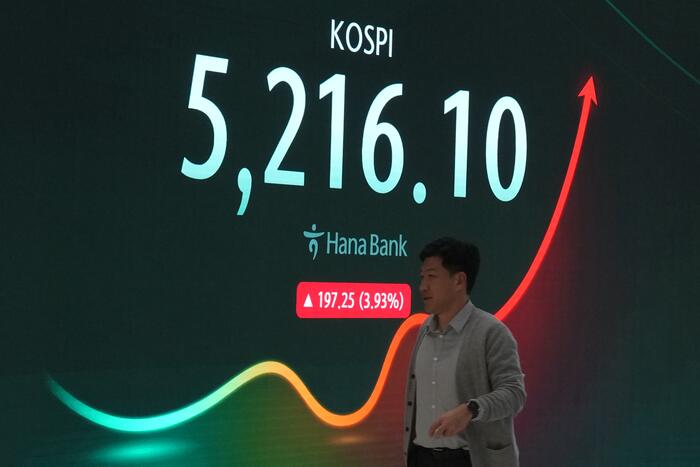
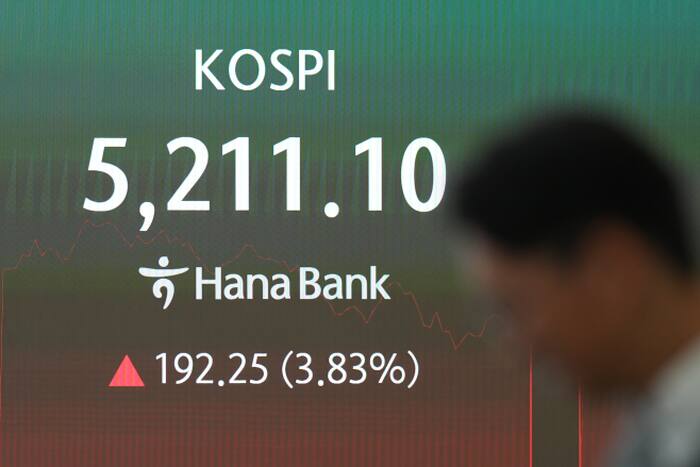
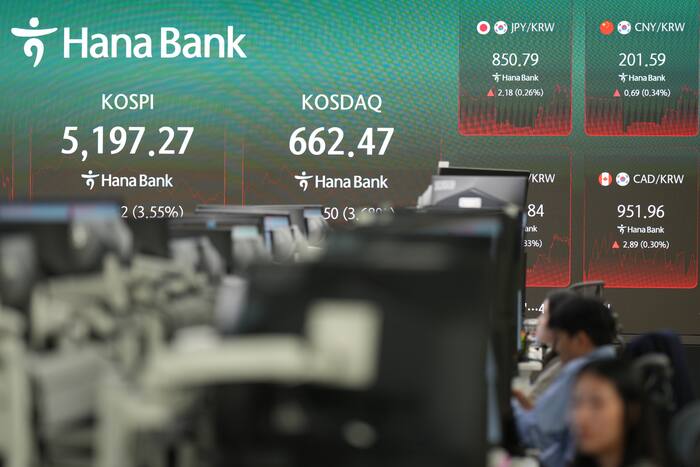
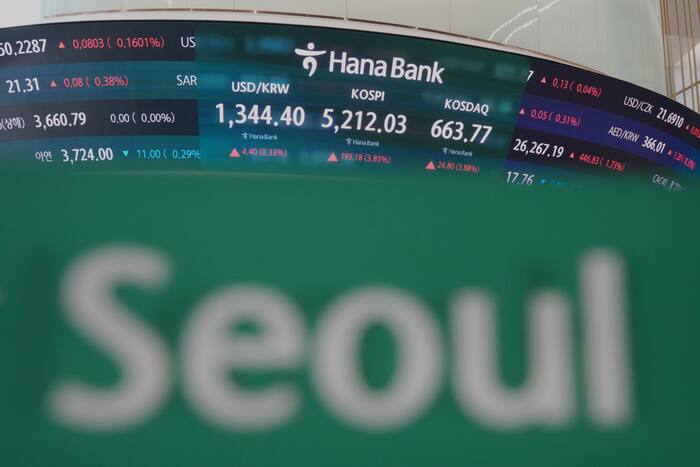
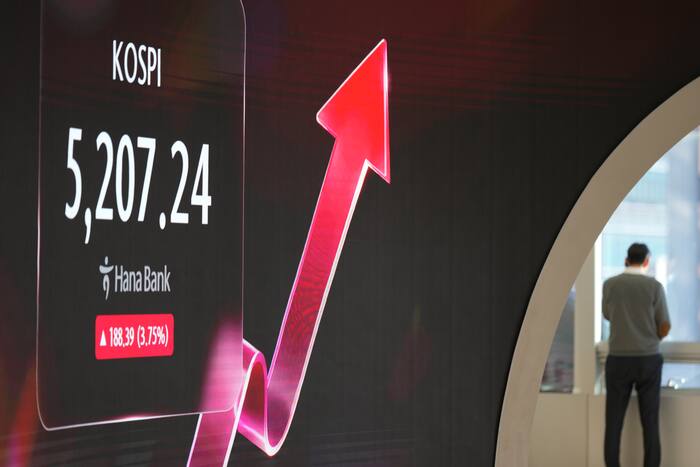
South Korea’s Kospi climbed 4.4% to 5,239.13. Samsung Electronics gained 4.7% and SK Hynix climbed 6.7%.
In Hong Kong, the Hang Seng rose 0.6% to 24,584.81, while the Shanghai Composite index edged 0.2% higher to 3,666.12.
China’s exports in October climbed 35.2% from a year earlier, while imports grew 41.6%, according to customs data released on Tuesday.
That has put the country on track for another record for the year since the trade surplus for 2026 has already surpassed $1 trillion.
Australia’s S&P/ASX 200 rose 1.1% to 9,129.00.
Markets in India were closed for a holiday.
Investors are watching the U.S. consumer price index report for October due Tuesday, with inflation expected to rise to 3.9% from 3.7% in September. The inflation data will be clues on whether the Fed will raise the interest rate.
On Monday, the S&P 500 jumped 2.3% for a second straight gain after a wipeout on worries that Democratic victories in the U.S. midterm elections could lead to a slowdown in the construction of AI data centers. The best day for the index since April has it sitting just 3.4% below its all-time high set last month.
The Dow Jones Industrial Average gained 2.2%, and the Nasdaq composite rose 2.7%.
Stocks were lifted by a decline in the price of Brent crude. It fell after President Donald Trump told CNN over the weekend that a resumption of strikes on Iran is “highly unlikely” if the United States sees progress in negotiations toward ending the war.
However, U.S. Secretary of State Marco Rubio said Sunday that Iranian demands had sometimes been “outrageous and ridiculous.”
Those data centers are coming under increased scrutiny following Democratic victories in last week’s election. The worry is that governments could impose restrictions on the industry, which would mean fewer purchases of artificial-intelligence related products and services around the AI boom.
That was on top of concerns that new construction of AI data centers may slow because of how expensive it’s become to borrow money. Before that, critics already were saying AI stock prices had shot too high and were in a bubble.
The stock that has become the face of the AI boom, Nvidia, fell 4.3%. The chip company said it’s investigating after its CEO, Jensen Huang, acknowledged an intimate relationship with a business executive who, according to The New York Times, U.S. intelligence determined was gathering information for China.
Nvidia’s board said it has “no reason to believe” that either national security or Nvidia secrets were compromised but its inquiry would examine all available information.
Guo Jiakun, spokesperson for China’s Ministry of Foreign Affairs, called the allegations “nothing but smears against China.”
The pullback in Treasury yields over the last month has helped rates for mortgages and other kinds of loans to ease. It also gave a boost to prices for stocks and other investments.
In other dealings Tuesday, the price of Brent crude, the international standard, fell 1.2% to $91.48 a barrel. U.S. benchmark crude oil was down 1.3% to $85.72 per barrel.
The U.S. dollar rose to 157.96 Japanese yen from 157.90 yen. The euro slid to $1.1229 from $1.1266.