Black voting advocates in the South say the midterm surge was not just a ‘blue wave’
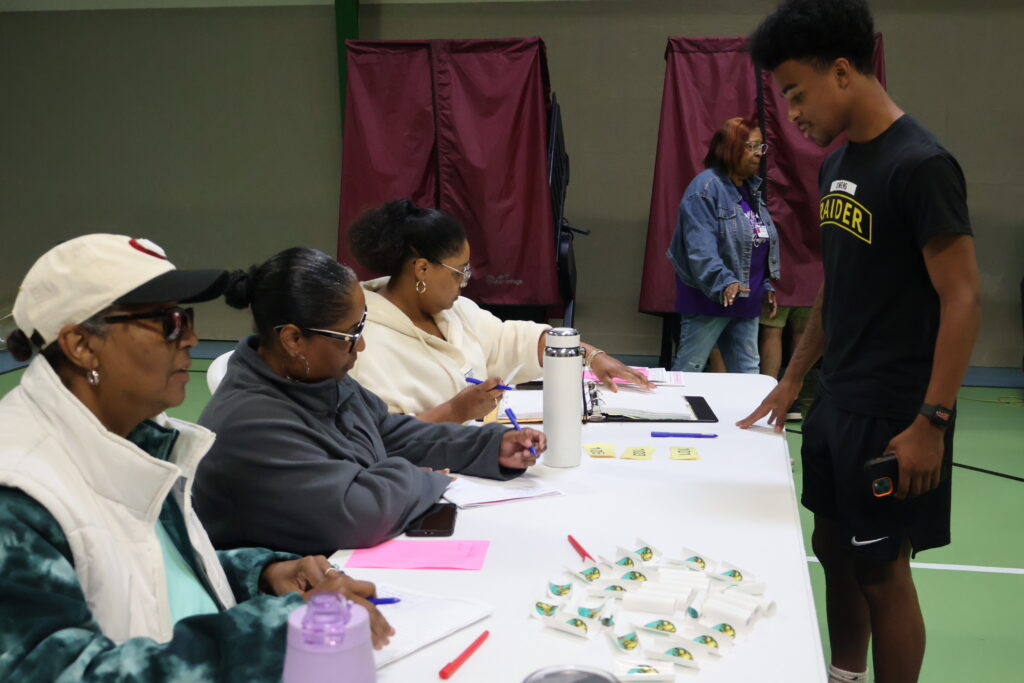
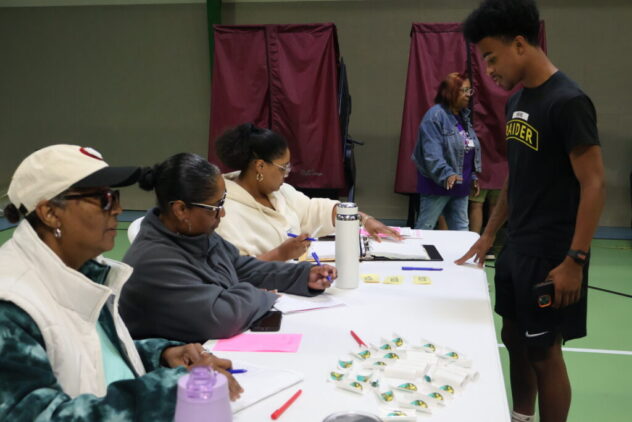
States across the Deep South, a region steeped in a legacy of racially-based voter suppression, reported high and in some cases historic Black voter turnout for the Nov. 3 election, contributing to the Democratic takeover of the next Congress. But advocates who worked to ensure all voices were heard on Election Day say this strong showing should not only be labeled as part of the “blue wave.” Rather, they see it as the fruit of a decades-long effort to boost Black voter access. “If your analysis on what happened Tuesday is that this is a mandate against Trump, I think it’s a bit lazy. Dig deeper,” said Charles Taylor, executive director of the Mississippi NAACP. “… Because this is not just about Trump. This is about years in the making.” Taylor and four other voting rights activists from the South spoke with reporters in a video conference Thursday, a day after the Associated Press declared Democrat Scott Colom the winner of Mississippi’s U.S. Senate race over Republican incumbent U.S. Sen. Cindy Hyde-Smith. Colom will be the state’s first Black U.S. senator since the Reconstruction era. Black voters cast 33% of Mississippi’s ballots on Nov. 3, up from 30% in the 2024 presidential election, according to New York Times estimates. Colom’s narrow victory over Hyde-Smith came in a state President Donald Trump won by 24 points two years ago. His win also comes after Mississippi election officials, just days before the election, declared more than 230,000 voters inactive after Secretary of State Michael Watson used questionable Experian credit rating data to vet voters’ addresses. In North Carolina, 23 of its 100 counties eliminated early voting on Sundays for this election cycle. Chris Shenton, senior counsel for the Southern Coalition of Social Justice, said this was a direct tactic from elections officials to lower Black voter participation, as many churches in the state organize “Souls to the Polls” events to bring people to early voting locations. “You see all sorts of tools, mechanisms, old poison in new bottles being used to suppress Black turnout,” Shenton said. “ … Despite that, black voters increased their share of early voting turnout in the state.” Democrats in North Carolina flipped four U.S. House seats and will represent nine of the state’s 14 districts, including five that had been drawn to favor Republicans. Official data reflecting voter turnout in North Carolina through Nov. 3 have not been made available, but Black voters outpaced the white counterparts 39% to 36% in the early voting period , according to an analysis from Shenton’s organization. Louisiana also reported record turnout among Black voters during early voting, making up 33% of participants. Their showing resulted in a tighter-than-expected U.S. Senate race, in which Black Democrat Jamie Davis finished less than 2 percentage points behind Rep. Julia Letlow, R-Baton Rouge. Ashley Shelton, founder and CEO/president of the Power Coalition for Equity and Justice, said she believes voters looked past party affiliation throughout the South to propel their preferred candidates to wins. “Voters went out and voted for their families, for their communities and themselves,” Shelton said. “They did not go hit an R-button or a D-button. They picked the candidate that was going to give them the best opportunity at a better life.” Jace Woodrum, executive director of the South Carolina ACLU, said the Election Day results in his state reflect years of frustration from Black voters. Earlier this year, they fought to block an attempt from Republicans to take away one of the state’s two majority-Black U.S. House districts out of its seven seats. “Black voters were still pissed off…
Originally published by News From The States.
Read the original article