Three-way talks between Russia, Ukraine and the United States opened Tuesday in Abu Dhabi, the head of Kyiv’s delegation said.
“We have moved to a trilateral negotiation format involving Ukraine, the United States and Russia” after initial Ukrainian discussions with NATO and European envoys, Rustem Umerov, the head of Ukraine’s Foreign Intelligence Service, said on social media.
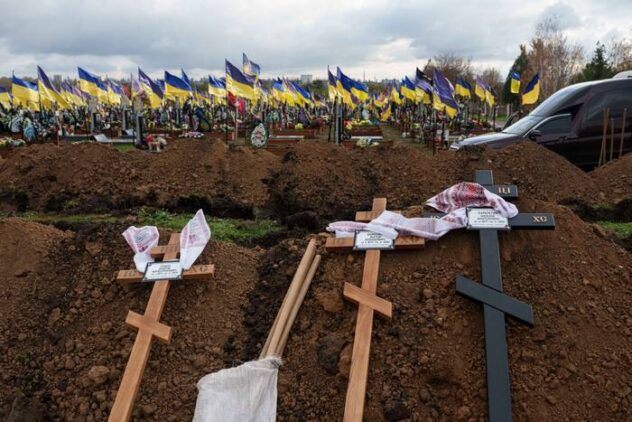
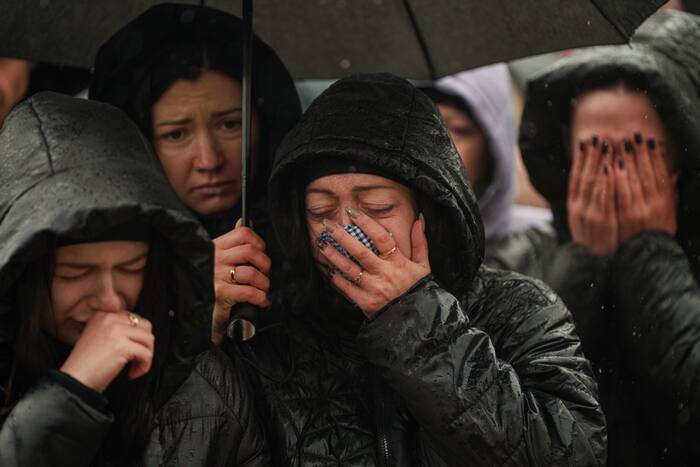
The U.S. is renewing a push to end the war between Moscow and Kyiv after three rounds of negotiations earlier this year. The conflict, Europe’s biggest since World War II, began after Russia’s all-out invasion on Feb. 24, 2022.
The two-day session in Abu Dhabi, the first such meeting since February, will focus on security guarantees.
U.S. President Donald Trump’s son-in-law, Jared Kushner, said on X that he and fellow envoy Steve Witkoff were working on a “negotiated solution that can deliver lasting peace and create the conditions for a sovereign, secure, and prosperous Ukraine within a more stable European security environment.”
Umerov said that the day began with a meeting between the Ukrainian team, the U.S. envoys and representatives from the United Kingdom, France, Germany, Italy, NATO and the European Commission.
“Next, we will move to a trilateral format involving Ukraine, the United States and Russia,” Umerov said in a social media post.
Russian state news agency RIA Novosti reported Tuesday that the Russian delegation had arrived at the site of the talks.
Russia and Ukraine hold to their divergent demands
The Russian and Ukrainian governments remain far apart on key elements of any prospective deal to end the full-scale war, now nearing its five-year mark.
Russian President Vladimir Putin wants Ukraine to pull its troops back from Donetsk, Luhansk, Zaporizhzhia and Kherson — the four regions that Moscow illegally annexed in September 2022 but never fully captured. He also demands that Ukraine abandon its bid to join NATO, accept strict limits on its military and drop restrictions on the Russian language and the Moscow-affiliated Orthodox Church in Ukraine.
Putin wants a comprehensive peace deal on those conditions and won’t agree to a general halt in hostilities, arguing that it would only allow Ukrainian troops to rest and replenish their weapons stockpiles. He has warned that Russia will achieve its goals by force if Kyiv refuses to meet its conditions for peace.
Ukrainian President Volodymyr Zelenskyy, who was visiting Denmark on Tuesday, rejects Putin’s demands to voluntarily cede territory that Russia hasn’t been able to take on the battlefield. Zelenskyy also rejects any limits on Ukraine’s military or its arrangements with Western partners, which Kyiv sees as essential security guarantees to stop Moscow from invading again.
Ukraine argues that an immediate ceasefire is the necessary first step toward negotiating a wider settlement and says a direct meeting between Putin and Zelenskyy is the only way territorial issues can be settled.
Russia and Ukraine send experienced negotiators
The Russian and Ukrainian delegations include senior officials who have attended previous rounds of talks.
Russia’s chief negotiator is Putin aide Vladimir Medinsky, who has led Moscow’s team since the first direct peace talks with Ukraine in Istanbul in March 2022. The Russian delegation also includes deputy foreign ministers Sergei Ryabkov and Mikhail Galuzin, military intelligence chief Igor Kostyukov and deputy chief of the General Staff’s operational department, Yuri Zhigarlovsky.
Apart from Umerov, the Ukrainian delegation also reportedly includes Zelenskyy’s chief of staff, Kyrylo Budanov, his deputy, Sergiy Kyslytsya, and Davyd Arakhamia, the parliamentary faction leader of Zelenskyy’s Servant of the People party.
U.S. says broader European security deal in the works
Last week, Trump declared that some kind of grand deal about European security was in the works, describing it as “a big agreement” that is “going to involve more than Ukraine.”
Kushner said Monday on X that a “comprehensive and lasting settlement will also require direct engagement between Russia and our European partners on the broader security arrangements that affect them.” The discussions in Abu Dhabi will set the stage for “that engagement to begin in the near future, as part of a broader multilateral process,” he said.
Moscow has praised the broad approach.
“We can only welcome the (U.S.) negotiators on President Donald Trump’s request proposing to put the issue of collective security on top of the agenda of the talks on a Ukrainian settlement,” Russian Foreign Minister Sergey Lavrov said.
Just before Moscow launched the all-out invasion in 2022, it demanded that NATO roll back its deployments in the alliance’s member countries in Central and Eastern Europe, seeing their presence as a security threat. Similar demands will likely be part of any comprehensive peace deal proposed by Russia.
Kushner said that before the start of the three-way talks, he and Witkoff will meet separately with envoys from Ukraine, the European Union, NATO, Germany, France, the United Kingdom and Italy to “continue the close consultation and coordination we have undertaken on European security and Ukraine’s postwar future over the past several weeks.”
Some in the EU see Washington’s proposals as too accommodating to Moscow.
Russia has objected to the Europeans’ involvement in the three-way talks, but said that EU representatives could join at a later stage.
Russia and Ukraine have escalated aerial attacks
While the ground battles have morphed into a war of attrition along the 1,200-kilometer (about 750-mile) front line, Russia and Ukraine have ramped up their long-range strikes with drones and missiles.
Russia has intensified its air campaign against Ukraine’s power grid, seeking to weaken the country’s resolve as winter sets in. Moscow has relied on ballistic missiles and jet-powered drones, taking advantage of Ukraine’s shortage of U.S.-made Patriot interceptors.
Ukraine, meanwhile, has escalated its drone strikes on Russian oil refineries.