Georgia Democrats ride national blue wave into power in history-making election

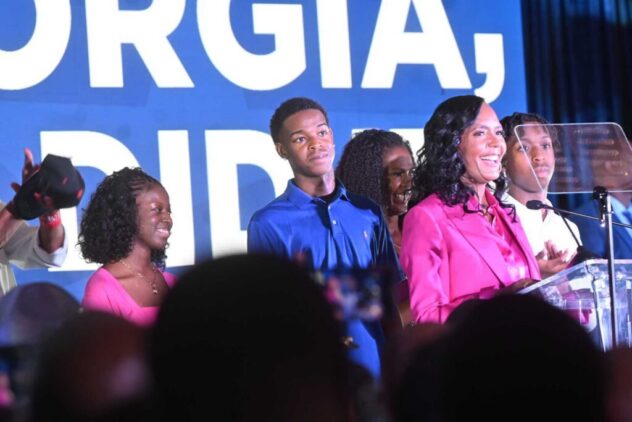
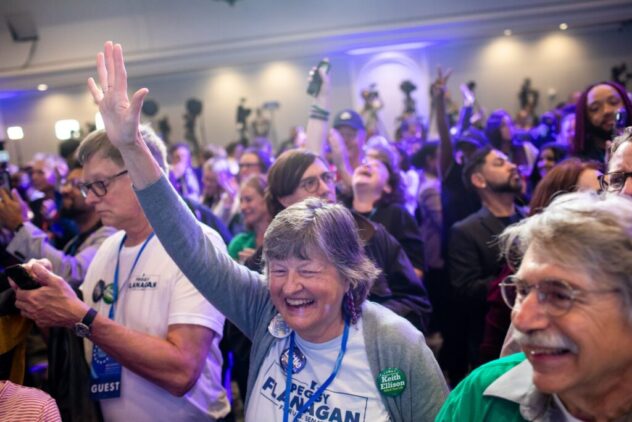
Within an hour of polls closing Tuesday, it was clear that Democrats had made a strong showing and that U.S. Sen. Jon Ossoff would be re-elected by a large margin. But what unfolded after that far exceeded what even the most optimistic Georgia Democrat could have imagined. By about 9 p.m., it became apparent that not only would former Atlanta Mayor Keisha Lance Bottoms become Georgia’s first Democratic governor since Roy Barnes left office in 2003 but that the entire slate of Democratic statewide candidates would share in the victory, flipping offices like agriculture and insurance commissioners that had been considered relatively safe for Republicans. House Democrats are also poised to take control of the state House of Representatives for the first time in more than two decades. “I’ve been at these elections a lot of times when we went home crying, and so it was hard for me to believe when the results came in as early as they did,” House Minority Leader Carolyn Hugley, who could be in line to be the chamber’s next speaker, told reporters Wednesday. “I’m like, OK, is that really real? And then they kept coming, kept coming, kept coming. So it was overwhelming. I was so very excited. “We’re excited not only for the Democrats, but for the people of Georgia, because this shows people that elections matter and that your voices can be heard and your votes will matter,” she added. What happened on Tuesday will be discussed by Georgians for years – and shape the state’s future for generations, starting by transforming the state government next year. As the dust settles in the aftermath, here are five of the biggest initial takeaways from a historic election. How far did the blue wave reach? Democrats have a lot to celebrate, with victories this year far exceeding the traditionally blue stronghold of metro Atlanta. Bottoms made gains across middle and southwest Georgia, winning over a majority of voters in eight counties where voters picked Republican Gov. Brian Kemp in the 2022 midterms: Burke, Clay, Fayette, Houston, Jefferson, Peach, Sumter and Washington. Emory University political science professor Andra Gillespie said that Democratic candidates made strides with many key groups, including independents and white voters in the state. “The national mood was sour, and Democrats were able to ride that wave in places that we didn’t expect,” she said. “But I think it remains to be seen whether or not voters who were dissatisfied with Trump are going to stick with Democrats.” But Georgia Republicans did have one bright spot in all the election news, managing to hold on to their nine seats in the U.S. House even as a number of congressional seats across the country flipped Democratic. But Gillespie noted that the margins of victory in many House districts were much tighter this year than they normally are, signaling widespread dissatisfaction with GOP leadership. “I think Republicans should heed the margins and recognize that there was discontent in their districts even when they won, and that voters in their districts contributed to the Democratic sweep of the statewide offices,” she said. The energy benefited down-ballot Democrats too, bringing a wave of new lawmakers to the Legislature and changing the balance of power. Even before the polls closed, some conservative voters said they felt the tide changing. Joel Pirtle, a 50-year-old IT manager from Henry County who voted for Collins and Jackson, said that he would not be surprised if Democrats managed to flip his state representative’s seat, which is currently held by Republican state Rep. Noelle Kahaian. Kahaian did end up losing her…
Originally published by News From The States.
Read the original article