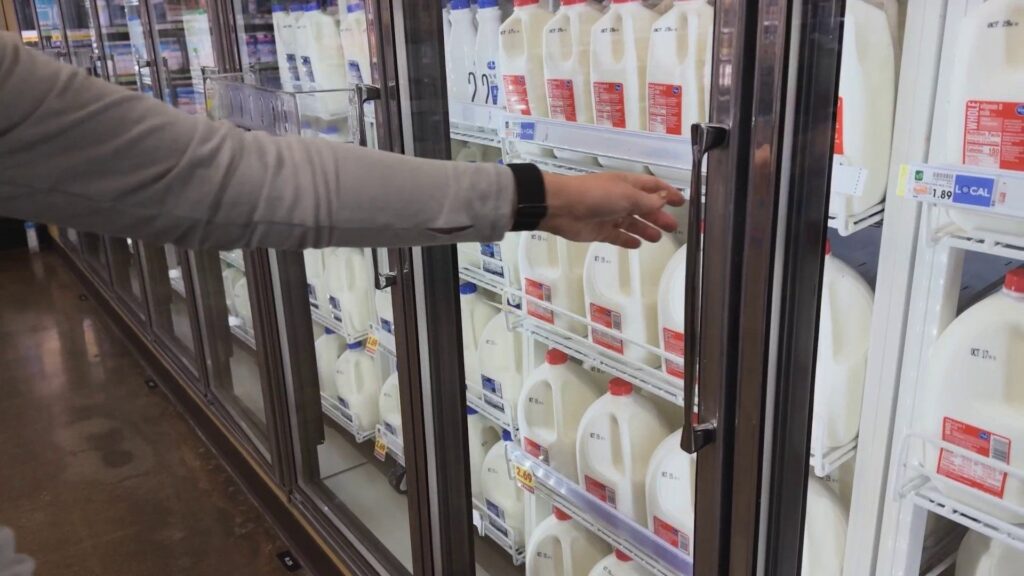
Consumers may have noticed higher prices for staple items such as beef and milk at the grocery store in the last few months. Those increases reflect deeper challenges facing farmers and ranchers across Texas and the nation, according to the Texas Farm Bureau.
“We have the lowest cattle inventory, the lowest number of cattle in 75 years right now,” said Gary Joiner, director of communications for the Texas Farm Bureau. “That’s because of drought, the cost of feeding those animals, and other economic pressures.”
With fewer cattle available, the supply chain is tightening, resulting in higher prices for consumers at the meat counter, and relief may not come quickly.
“Economists are saying it will probably be another year or two before that cattle inventory becomes more normal,” Joiner said.
Milk prices are also rising, and transportation costs — especially fuel — are playing a significant role in driving up prices.
“The transportation cost of actually hauling milk from the farm to the processor and to the retail outlet is why milk prices are higher,” Joiner explained. “Diesel accounts for about 92% of the milk that is transported in this country, which is done by trucks.”
Despite rising prices at the store, farmers themselves are seeing only a small share of the profits. Producers receive roughly six cents of every dollar spent on food, according to the Texas Farm Bureau.
That means while shoppers are paying more at checkout, the increase is largely absorbed by other parts of the supply chain — not the farmers who produce the food.
Read also: