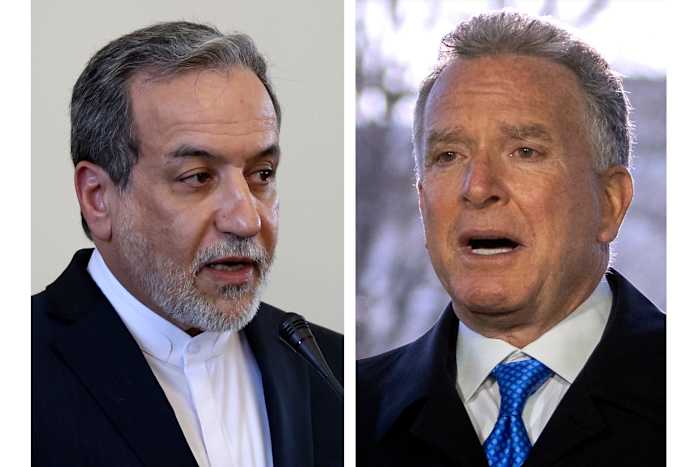
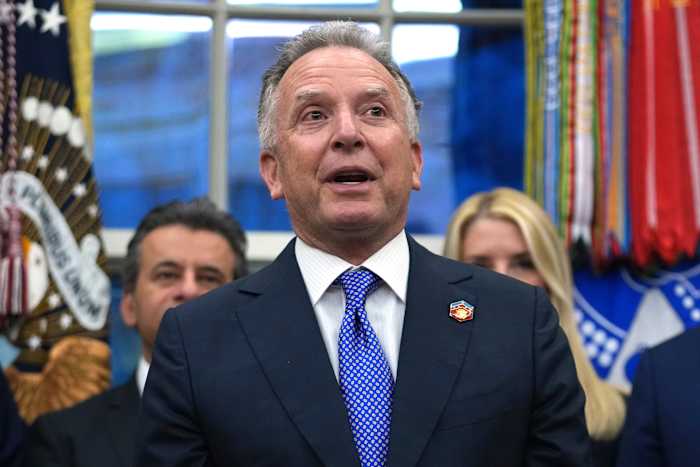

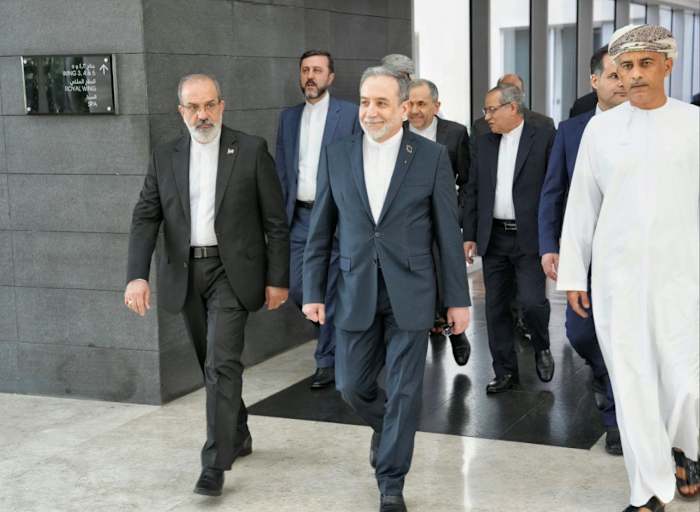
Iran and the United States held indirect talks in Oman over Tehran’s nuclear program on Friday, months after America bombed Iran’s uranium enrichment sites and just weeks following nationwide protests that convulsed the Islamic Republic.
Iran’s Foreign Minister Abbas Araghchi described the talks as “a very good start” even as the parties met Oman’s top diplomat at different times at a palace on the outskirts of the country’s capital, Muscat.
Both Araghchi and the Omanis described the talks themselves as focused on merely trying to find a way to hold future negotiations — seemingly returning to the start of discussions about the Iranian nuclear program that unfolded over months a year ago, before Israel launched its 12-day war on Iran in June.
The U.S. side, represented by U.S. envoy Steve Witkoff and Jared Kushner, President Donald Trump’s son-in-law, had no immediate comment on the talks.
In an unusual development, U.S. Navy Adm. Brad Cooper, the head of the American military’s Central Command, also attended the meeting — something that did not happen in previous rounds and likely served as a signal to Tehran that Washington may still strike Iran if negotiations fail.
With the aircraft carrier USS Abraham Lincoln and other warships in the region, along with more fighter jets, the U.S. now likely has the military firepower to launch an attack if it wanted. But whether attacks could be enough to force Iran to change its ways — or potentially topple its government — remains far from a sure thing.
Meanwhile, Gulf Arab nations fear an attack could spark a regional war dragging them in as well. That threat is real — already, U.S. forces shot down an Iranian drone near the Lincoln and Iran attempted to stop a U.S.-flagged ship in the Strait of Hormuz.
Iran’s top diplomat offers a positive note
Araghchi offered cautious optimism as he spoke in a live interview from Muscat, Oman, on Iranian state television. He described Friday’s talks as taking place over multiple rounds and said that they were focused primarily on finding a framework for further negotiations.
“We will hold consultations with our capitals regarding the next steps, and the results will be conveyed to Oman foreign minister,” Araghchi said.
“The mistrust that has developed is a serious challenge facing the negotiations,” Araghchi said. “We must first address this issue, and then enter into the next level of negotiations.”
Omani palace hosts talks
The palace, near Muscat’s international airport, had been used by Oman in earlier talks Iran-U.S. talks in 2025. Associated Press journalists saw Iranian officials at the palace and later returning to their hotel.
Only after the Iranian vehicles left did another convoy, including an SUV flying the American flag, enter the palace grounds, where it stayed for about an hour and a half, AP journalists saw.
After that, Oman’s Foreign Ministry published a statement saying that the sultanate’s foreign minister, Badr al-Busaidi, met separately with Araghchi, then with the Americans.
“The consultations focused on preparing the appropriate circumstances for resuming the diplomatic and technical negotiations by ensuring the importance of these negotiations, in light of the parties’ determination to ensure their success in achieving sustainable security and stability,” the Omani announcement said.
Nuclear program on the table at the least
It remains unclear just what terms Iran is willing to negotiate at the talks. Tehran has maintained that these talks will only be on its nuclear program. However, Al Jazeera satellite news channel reported that diplomats from Egypt, Turkey and Qatar offered Iran a proposal in which Tehran would halt enrichment for three years, send its highly enriched uranium out of the country and pledge “not initiate the use of ballistic missiles.”
Russia had signaled it would take the uranium, but Iran has said ending the program or shipping out the uranium were nonstarters.
U.S. Secretary of State Marco Rubio said on Wednesday that the talks needed to include all those issues.
“I’m not sure you can reach a deal with these guys, but we’re going to try to find out,” he said. ___
The Associated Press receives support for nuclear security coverage from the Carnegie Corporation of New York and Outrider Foundation. The AP is solely responsible for all content.