
Katia Arias buzzed with hope on Friday morning as she gathered at the gates of a prison on the outskirts of Havana, waiting with other families for their loved ones to be freed in one of the biggest prison releases by the Cuban government in years.
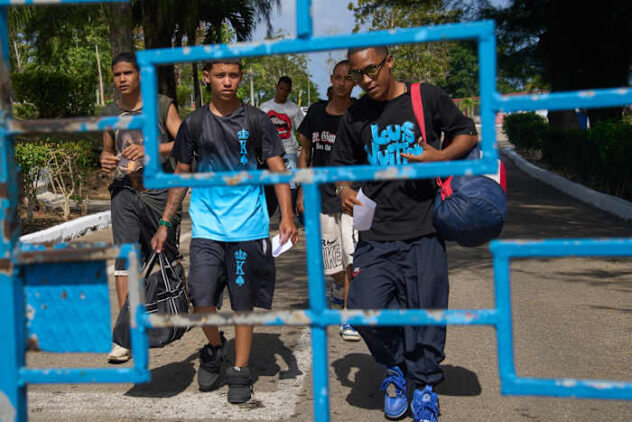
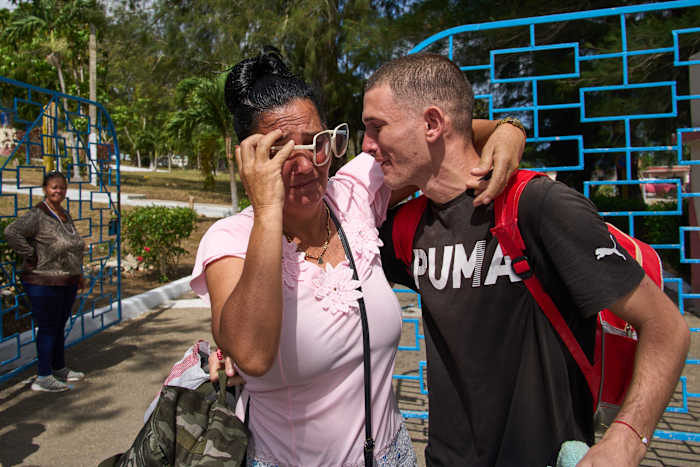
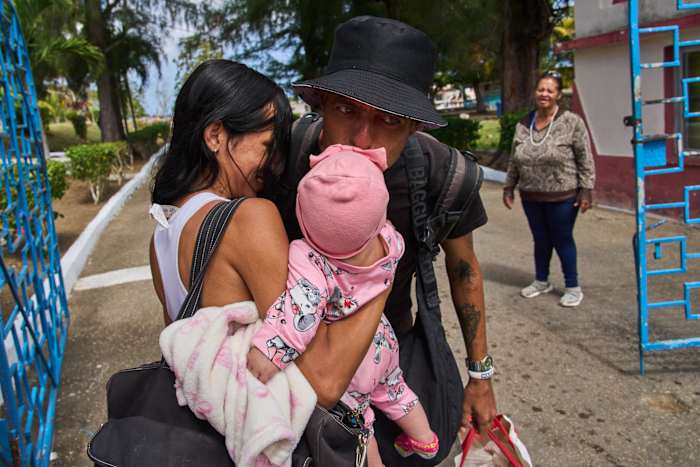
When her 20-year-old son Emilio Alejandro Leyva walked out of the doors of the detention facility with dozens of other prisoners, bags and a small release document in hand, she wrapped her arms around her son, who was detained for a robbery, for the first time in years.
“It has been so difficult, but today God has given me so much joy,” said Arias, 43, breaking down in tears. “Today, I feel so happy. This is how all mothers who will have their children released today should feel.”
The outpouring of joy from families comes the day after Cuba’s government said it was going to release 2,010 prisoners in what it said was “humanitarian gestures” ahead of Holy Week; it wasn’t immediately clear how many were released on Friday.
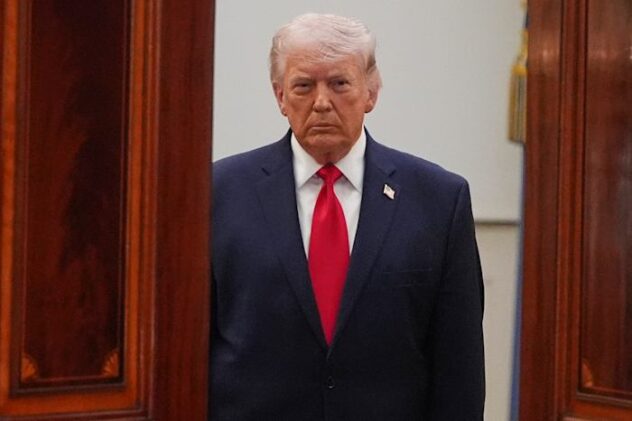
The release comes as the Cuban government navigates extreme pressure and a crippling oil blockade by the Trump administration, which has openly expressed the desire for regime change and the release of those arrested for protesting.
It was unclear whether any of the prisoners released Friday are among the 1,214 people activist groups say are imprisoned for political reasons in Cuba. The government denies holding political prisoners.
Uncertainty over released prisoners
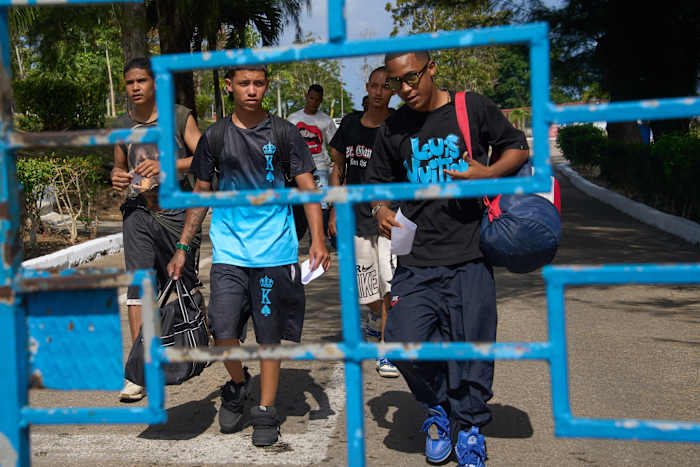
On Friday, detainees in the La Lima prison on the rural outskirts of Havana said they were woken up at 6 a.m. and heard their names called out. Hours later they were walking into the arms of loved ones awaiting them in front of blue prison gates.
The majority of prisoners interviewed Friday by The Associated Press were not serving time for political charges, though it’s uncertain how many of those released were protesters — often charged with public disorder, contempt or terrorism. Many of the more than one thousand people the activist organization Prisoners Defended has registered as detained for political reasons were protesters from the 2021 mass demonstrations on the island, which were met with widespread arrests by the government.
Sporadic protests have broken out in recent months as the island sinks into a deeper crisis. In one March incident, protesters burned the headquarters of the communist party in central Cuba, leading to five arrests.
The lack of information over releases on Friday fueled frustration among human rights and opposition groups, who said the releases were a good sign, but fell short of real change.
“The government presents it as a humanitarian gesture toward prisoners, not as the release of political prisoners,” said Manuel Cuesta Morúa, leader of the Council for Democratic Transition in Cuba, the island’s main opposition platform. “By doing so, it mixes things up to avoid giving the impression that it recognizes political imprisonment in Cuba.”
The group has demanded a government amnesty law and says that people who were previously freed are often placed under house arrest or live under conditions where they can’t speak freely.
During a previous release of 51 people in March, organizations monitoring prisons in Cuba noted that 22 had political motives in their cases.
The nongovernmental organization Justicia 11J wrote in a statement Friday that no partial release can be considered progress “as long as the criminalization of the exercise of fundamental rights persists.”
“Although every release represents immediate relief, especially for families, in a context marked by the severity of conditions in the country’s prisons … we warn that this gesture does not constitute a change in the repressive policy of the Cuban state,” the organization said.
US pressure on Cuba
The releases come as U.S.-Cuban tensions are running high. The Trump administration has suffocated the island by imposing an oil blockade, pushing the already stricken island to the brink, crippling hospitals and increasing the number of islandwide blackouts.
Cubans were offered a brief moment of relief this week when U.S. President Donald Trump said the government allowed a Russian ship carrying a nine to 10 day supply of fuel to the island. It wasn’t clear if the Cuban or Russian governments made any concessions to allow the shipment to go through. A second Russian tanker is on the way.
Cuba periodically frees prisoners at key moments.
In January 2025, Cuba’s government released 553 prisoners as part of talks with the Vatican, a day after the Biden administration announced its intent to lift the U.S. designation of the island nation as a state sponsor of terrorism.
Cuba’s government said Friday’s release marked the fifth since 2011, and that it has freed more than 11,000 people.
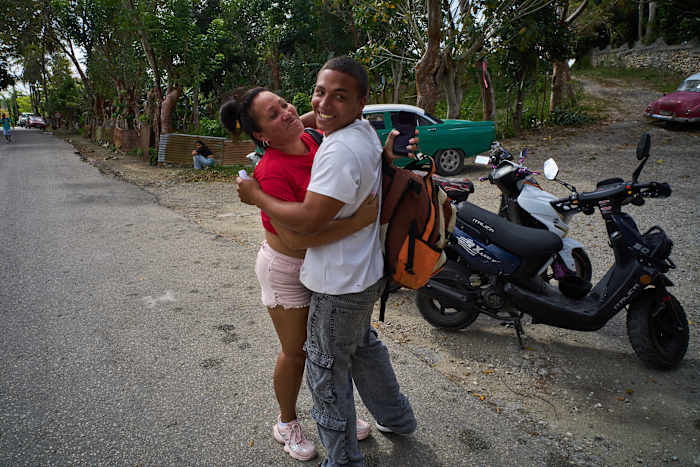
Despite ongoing uncertainty, scenes of hope emerged outside the La Lima prison on Friday as families wrapped their arms around each other and a father planted a kiss on the head of his child swaddled in pink.
Damián Fariñas, 20, who has served the majority of his 2-year prison sentence for a robbery, was greeted by three beaming friends waiting for him on the street.
“This is freedom, a pardon, owing nothing to anyone. I’m heading out into the world,” he said.
___
Associated Press journalists Ramón Espinosa and Ariel Fernández contributed from Havana. Megan Janetsky contributed from Mexico City.
___
Follow AP’s coverage of Latin America and the Caribbean at https://apnews.com/hub/latin-america