A final look at the Jeremy Sochan era of Spurs basketball
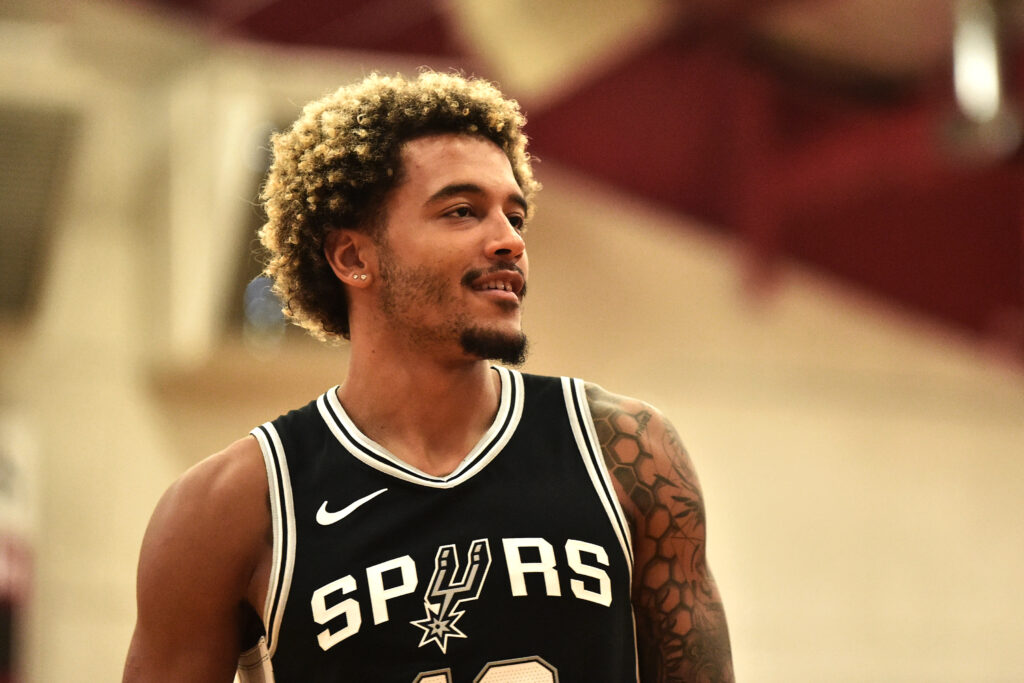
After the rumors of a potential trade before the deadline, Jeremy Sochan’s time in San Antonio ended with even less fanfare than expected. Sochan was bought out and joined the Knicks, and the Spurs used their open roster spot to sign Mason Plumlee to bolster their center depth. It was a banal ending to what once was an exciting partnership.
Sochan was the first lottery pick of the tank era, which started with the Derrick White trade. He was a charismatic, flawed, intriguing first piece, and fans understandably latched on to his development while looking for hope in those early days. The attachment to Sochan continued even as his minutes dwindled and his importance to the rebuild declined, so it’s sad to see him go.
The question is, what went wrong? Sochan thinks it was a lack of opportunities from a coach with whom he didn’t see eye to eye. It was clear since Mitch Johnson took over that he wasn’t as high on Sochan as Gregg Popovich. But what happened before that is as important to understanding why a former lottery pick ended up waived before his rookie contract expired, and why it wasn’t that big of a surprise.
Under Gregg Popovich, the Spurs tried extremely hard to make things work with Sochan, but failed
Any discussion about Sochan has to start with the inconsistency in roles and positions he faced. Most people, myself included, hated the Point Sochan experiment for good reason: the skills to make it work just weren’t there, at least then. Sochan was a solid ball handler and passer for his position, but he wasn’t suited to be an on-ball creator, especially with the supporting cast he had around him. It seemed like they were setting him up to fail. As it was happening, it made no sense.
Looking back, it was probably done to find a way to keep Sochan on the floor even after his rookie year convinced the decision-makers that he wouldn’t be able to excel as a regular power forward. The most likely explanation for the seemingly nonsensical experiment is that it was an attempt to hide him on offense at one of the few positions/roles in which a consistent three-pointer is not a must: primary ball handler. (It’s also the likely reason why the Spurs are running their offense through Stephon Castle now, despite having De’Aaron Fox around.) The explanation that it was done to help develop his floor game is debunked by the way they used him next.
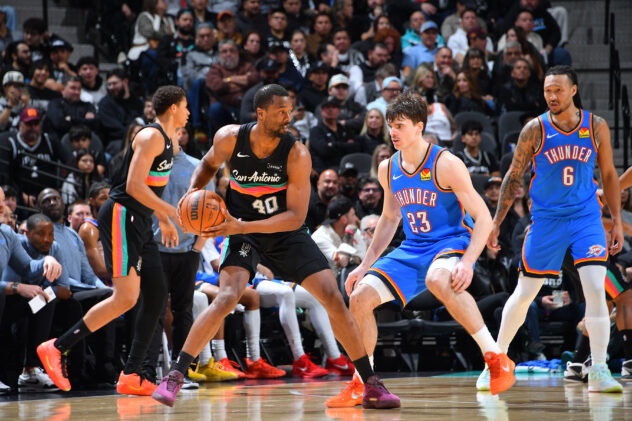
After their failed primary ball handler experiment, the Spurs moved Sochan to the only other role in which a complementary guy can survive without having to shoot: rim-running center. The fit was better with Sochan as an off-ball finisher. He set good screens and dived, roamed the baseline for dumpoffs, and crashed the offensive glass when the help defender overcommitted. As Victor Wembanyama developed as a shooter, he was able to space the floor for Sochan, and they switched positions on defense, with Victor patrolling the paint and Sochan hounding ball handlers. It worked for Sochan on offense, and it allowed the coaching staff to have their best perimeter defender on the floor.
The problem is that it makes no sense to build a team around Sochan. He’s simply not a star, and his skills weren’t unique enough. When there were no better options, the coaching staff made the pieces fit as well as they could, but when Stephon Castle replaced the perimeter defense he provided, and Keldon Johnson and Luke Kornet supplied the energy and offensive rebounding he used to deliver, Sochan’s minutes dwindled. Yes, Mitch Johnson could have made some room for Sochan next to Wemby and next to Kelly Olynyk, something he tried a few times, but with a potential replacement in place with similar defensive upside and no broken shot in Carter Bryant (coincidentally starting his rookie contract as Sochan’s ended), the coaching staff focused on the future.
The Spurs could have tried to just let Sochan succeed or fail by playing him exclusively at power forward. But they correctly realized that without a shot, the latter was the most likely outcome. There’s a reason very few players who approximate Sochan’s skill set get consistent minutes on good teams.
Maybe Sochan will make the Spurs look silly in a few years, but it doesn’t feel likely
Does that mean Sochan has no place in the NBA? Of course not, as the Spurs themselves proved. There’s a simple recipe that makes him useful: slot him at center on offense next to a perimeter-oriented big man, have him guard perimeter scorers on the other end, and enjoy his intensity and edge. You don’t build a team around Sochan or bend over backwards to find him minutes when you have better options, but if you already have a roster in which his skill set makes sense, he can contribute. The Knicks are such a team. Karl-Anthony Towns got Jarred Vanderbilt, one of the players most similar to Sochan, an extension when the two were in Minnesota, and he could do the same now.
There is a chance Sochan is in the league for 10 more years, even if the shot never develops much, but his other skills do. Derrick Jones Jr. and Toumani Camara, to name a few, have gotten just good enough at shooting that they can leverage their athleticism and defense into playing time and eight-figure deals. Sochan is only 22, so the shot might eventually become viable, and his career prospects would improve massively if that happens. Reaching the PJ Washington/Santi Aldama tier is not out of the question for him. There is a reason most teams don’t end up waving young players they drafted in the lottery, and it’s not just them falling for the sunk cost fallacy.
So maybe the Spurs will miss out on a solid role player, but after three and a half seasons, it doesn’t feel like they are missing out on the next Aaron Gordon or Draymond Green. They seem convinced that he’s simply not special on the court, which at this point is a safe bet. It might seem harsh to say this, but he’s no longer necessary, not because he’s replaceable, but because he has already been replaced.
It’s always hard to say goodbye to homegrown talent that represented hope during dark times. Sochan’s personality, feistiness, and commitment to doing whatever was asked of him to improve make moving on even more difficult. Those who were fans of his and think he was wronged will be hurt and need their time to mourn. But hopefully, they will eventually find solace in the fact that even without Sochan, the Spurs seem on their way to reaching the goal they set for themselves the year they drafted him.