He’s won Masters. And designs courses. Here are Ben Crenshaw distance thoughts
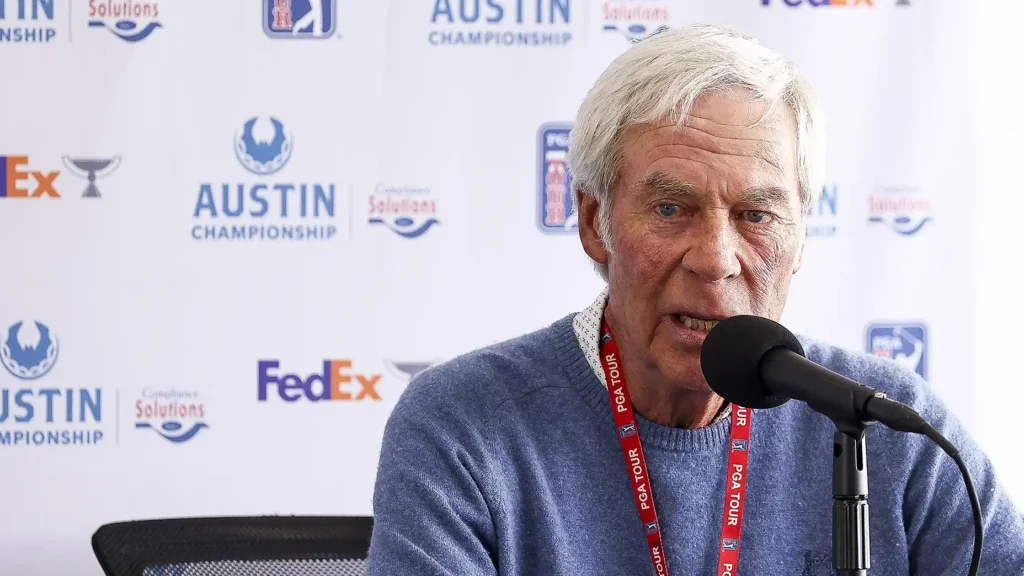
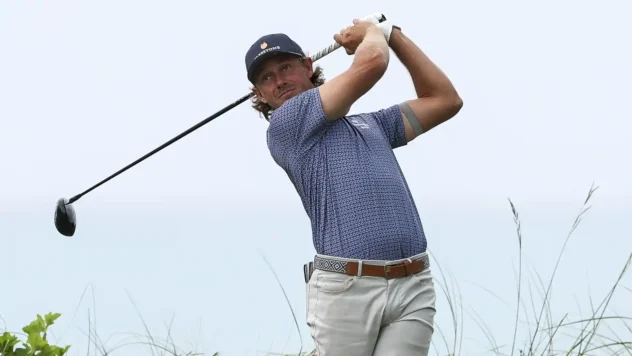
Two-time Masters winner Ben Crenshaw, ahead of this week’s Austin Championship, opened up on course design during the distance boom.
The post He’s won Masters. And designs courses. Here are Ben Crenshaw distance thoughts appeared first on Golf.
Two-time Masters winner Ben Crenshaw, ahead of this week’s Austin Championship, opened up on course design during the distance boom.
The post He’s won Masters. And designs courses. Here are Ben Crenshaw distance thoughts appeared first on Golf.
Ben Crenshaw, speaking as a golfer, sounds floored.
“I can tell you how I played with the guys I played with on the Tour, and I know their distances, what they can do,” the two-time Masters winner said, “and occasionally we’d have somebody who could hit it a good way like Tom Weiskopf. I mean, he was long for his time. I remember one year where Dan Pohl led the driving statistics — I think it was 275 or 280. That was the leader on the Tour.
“Now these guys carry the ball 320. They carry the ball 320.”
Then there’s Crenshaw the course designer.
In light of golf’s distance boom, his duality makes him an interesting observer, and his thoughts on Wednesday, ahead of the PGA Tour’s Austin Championship, made for interesting comments. By now, the growth in distance is well established — using the year Crenshaw first won the Masters as another example besides the one he gave above, the Tour’s driving distance leader in 1984 was Bill Glasson at 276.5 yards a drive; this year, the lowest average among 168 measured golfers was 282.8.
But there are questions, of course, chief among them being: Is the boom an issue? The consensus appears to think so, and in 2030, golf’s governing bodies plan to dial back the length of the golf ball — and possibly do more. One of the arguments in doing so is that, while golf courses have tried to grow in response to the increased distances, they’ve either run out of room to continue that, or can’t find any in which to begin.
More questions. Is gear to blame? No one will dispute that technology in clubs and balls has improved over the years? But is reigning in equipment the answer? Could golf course design tweaks be an answer instead? Also Wednesday, at a press conference ahead of the DP World Tour Championship, Jon Rahm said as much.
“I think a lot of the courses that stand the test of time are narrow, short golf courses where you need to place the golf ball,” he said. “I use the example of Valderrama. Valderrama hasn’t really changed much since I remember watching it, and it’s just as difficult every time you play it. Colonial, before they redesigned it, was one of those. Harbour Town, if it’s not windy, the scores do get low, but this past year, it showed how difficult it was.
“I think there’s a discussion to be had in both cases. I think there’s something that can be done with golf course design and golf course setup. And it could also be an idea to entertain to change or limit clubs or the golf ball, but I’m not a proponent of that. I think that kind of — I think there’s so much freedom in design in golf that you could make golf courses that are anti-distance.”
What says Crenshaw the course designer then? To also note, Crenshaw and design partner Bill Coore have been the minds behind some of the world’s greatest courses.
On Wednesday, Crenshaw said one of the ideas of design is to make courses playable for both pros and non-pros — “but it has stretched way out there now.” Still, he said legendary St. Andrews fits everyone better than anywhere. “St. Andrews,” Crenshaw said, “is still one of the examples of you can accommodate the best players in the world and entertain beginners or someone with lesser skill.”
But what if you’re not St. Andrews?
“It’s where the hazards are,” Crenshaw said. “If you don’t have so many carrying hazards to make it really difficult for a short player and still — and it has undulation and it has ground as hard as this table that spreads everything out, which it’s unusual. Not every course in the world has those capacities.
“So it’s very, very difficult.”
Crenshaw and others will now wait until 2030. In the meantime, he’ll continue to watch.
“So it’s very interesting in how it all puts together,” Crenshaw said. “I know there’s been discussions about the ball and the capacity and if you slow down the ball or something — you’ll hear more conversations about that.
“I know a lot of people would not like to have the ball slowed down because it’s spectacular to watch and see these statistics. I mean, the ball can only go so far.”
The post He’s won Masters. And designs courses. Here are Ben Crenshaw distance thoughts appeared first on Golf.