Final Fantasy Resonance Review – On Its Own Wavelength
Reviewed on:
Switch 2
Platform:
PlayStation 5, Xbox Series X/S, Switch, PC
Publisher:
Square Enix
Developer:
Square Enix
Release:
Rating:
Everyone 10+
RPG publisher Square Enix has been doing the Lord’s work lately by rescuing their discontinued mobile games and rehydrating them into full-fat RPG experiences. Last year’s Octopath Traveler 0 is one such triumph, and it’s safe to say Final Fantasy Resonance is another victory for reusing assets instead of throwing them in the garbage. More importantly, it’s a great RPG experience with a fun cast and character customization options that will make fans of the Final Fantasy V job system rabid with delight.
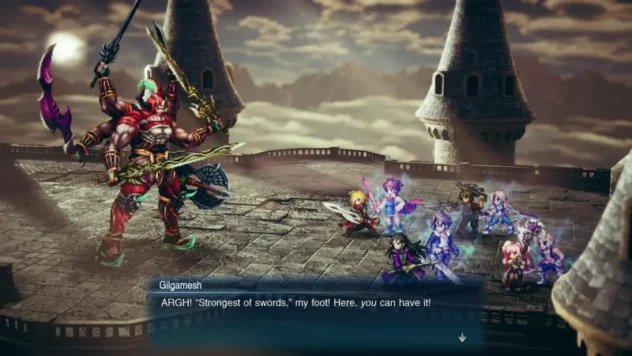
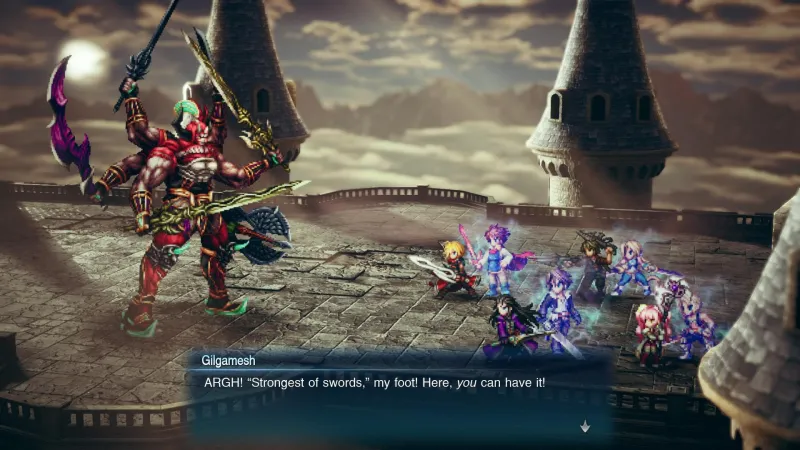
Resonance is based on the first season of the now-defunct Final Fantasy Brave Exvius mobile game, which ran four chapters in total from 2016 to 2025, but Resonance is no mere port. For starters, it received an HD-2D injection that gussied up Exvius’s already-impressive sprites. Resonance wears the HD-2D aesthetic confidently; Square Enix has obviously listened to past criticisms of its beloved graphical style, and it paid off. Resonance is an HD-2D game, but its highly detailed character sprites and occasional jaw-dropping pixel-based “cinema” scene differentiate it from the Octopath Traveler series and the Dragon Quest HD-2D remakes.
Resonance’s distinctions are its greatest strength, in fact. It’s easy to assume at first blush that its story about a boy and his best friend is nothing but a table to prop retro Final Fantasy references upon. It’s true that a key part of Resonance’s gameplay involves summoning “Visions” into battle, said visions being projections of characters from other Final Fantasy games. But that’s all they are: Projections. They teach transferable skills, à la Final Fantasy V’s job system. They can offer characters permanent stat boosts as they level up, like Final Fantasy VI’s espers. And when conditions are met, they can be summoned to perform a super attack via a CGI spectacle that will remind you Square Enix have been masters of game cinema direction since day one.
Each Resonance character can equip a Vision that lends them their powers in a fight, and also grants passive upgrades and skills. Rain, for example, is a heavy hitter with innate fire attacks, but if he wears Cecil Harvey as a backpack, he also gets access to light and dark magic. Cecil gets stronger as they fight together, and bestows skills that can be equipped as wanted. If you’re a Final Fantasy V job-head, you’ve come home.
But Final Fantasy Resonance is Rain’s story despite its many callbacks to past games. Yes, Rain is an amalgamation of past Final Fantasy heroes, from Cloud’s spiky yellow hair to Tidus’s daddy issues, to Zidane’s sunny attitude (with a hint of shadow), but that just makes him easier to root for. Rain’s roommate, Lasswell, contains notes of my beloved Kain Highwind from Final Fantasy IV, but there’s a troubled nobility to him that’s purely his own. They’re gradually joined by a cast of characters who click with each other (and thus, with me) thanks in part to comedic side-discussions delivered with quality voice acting. References to past Final Fantasy games are doled with clever subtlety. As a Final Fantasy XIV fan, I had to peel myself off the ceiling more than once when I encountered some choice shoutouts.
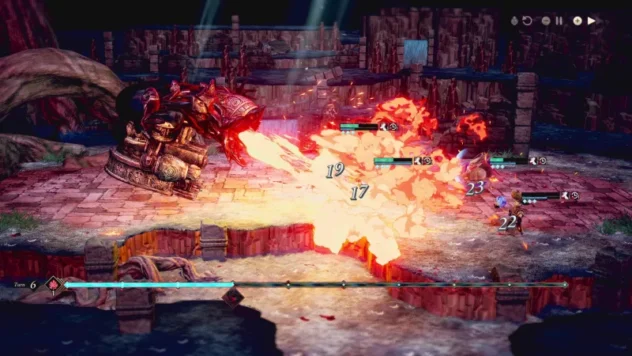
Resonance’s battle system grants it another distinction. It’s a classic turn-based system that shows off who’s next in line to attack, like Final Fantasy X. Every character brings a fighting style and elemental flavor to the party. Lasswell is a samurai who favors ice, Jake is a gunner attuned to the wind, and Lid will rain the fattest of steel chocobos upon your head in an earth-based attack.
Resonance is a snappy game, which might be its most welcome trait. Fast travel is generous, and dungeons are conquered in just the right amount of time. You’re looking at a 40-hour experience, give or take, which is downright digestible for an RPG in this day and age. On the flipside, Rain’s world lacks depth. Its towns are beautiful, unique, and filled with characters and quest-givers who are worth talking to, but the overworld connective tissue is thin and its dungeons lack pizzazz. An auto-battle option would lessen the frustration of random encounters, but said encounters don’t pop up nearly as often as they do in ancestral Final Fantasy games. Plus, the random battles are spaced in a way that makes grinding unnecessary unless you’re maxing out a Vision, which I appreciate, but sometimes you’re just trying to get to a place.
I went into Resonance expecting to like it for its salute to Final Fantasy characters across the decades, but I wound up loving the game for showing me a whole new canon. In a time when mainline Final Fantasy is still figuring itself out, Final Fantasy Resonance is easy to recommend. It has one foot planted on the solid foundation of Final Fantasy’s history, but with its rich graphics and likeable cast of characters it builds up from that history instead of merely pillaging it.