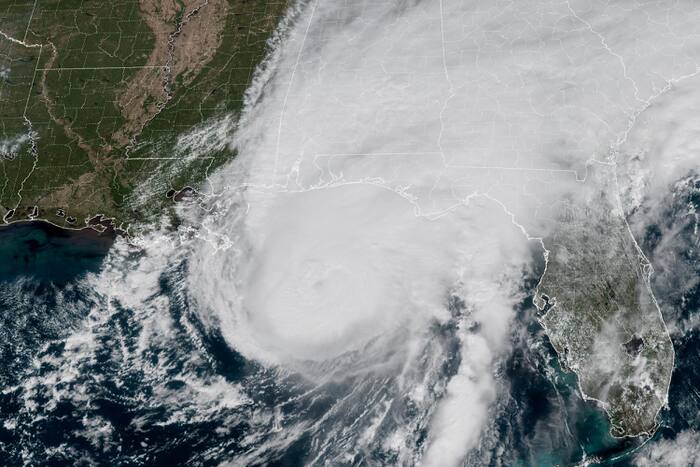
Hurricane Isaias crashed into the U.S. Gulf Coast on Friday as a dangerous Category 2 storm, hammering communities in Alabama and the Florida Panhandle with damaging winds, heavy rain, flooding and life-threatening storm surges.
The first hurricane of the Atlantic season made landfall near Destin, Florida, the Miami-based National Hurricane Center said. It had maximum sustained winds of 105 mph (169 kph). The storm weakened to just below major hurricane status before it came ashore.
“The storm is here. Buckle down at this point. Don’t be getting out on the roads,” Florida Gov. Ron DeSantis said at a news conference, adding that flash flooding would be a hazard “throughout the region.”
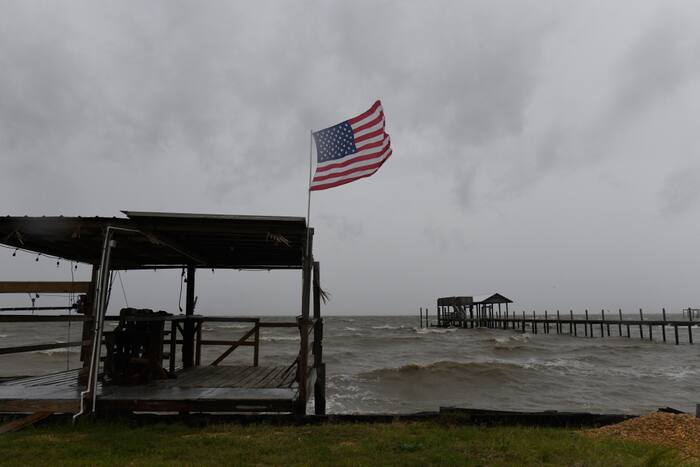
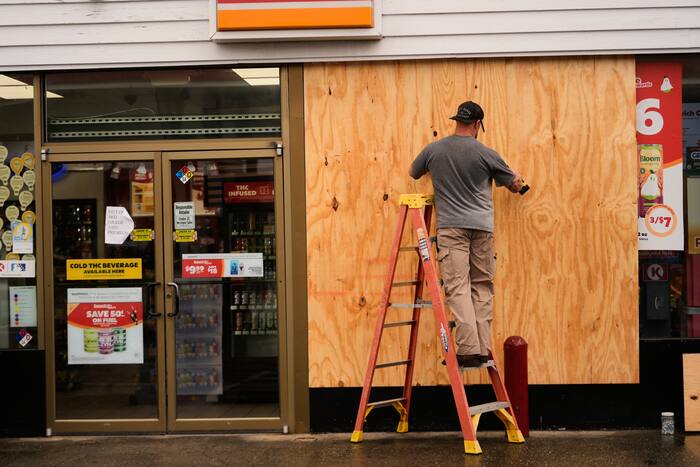
Hurricane-force winds lashed the Gulf shoreline in the low-lying coastal area known for powdery white sand beaches that are dotted with vacation homes, waterfront bars and seafood shacks. Forecasters warned the conditions could also stir up tornadoes across the Florida Panhandle and into southern Georgia.
“We’re watching it very closely, the hurricane,” President Donald Trump told reporters at the White House late Friday night as he returned from a rally in upstate New York, adding that it was “under control.”
Roads in Destin were flooded, while in nearby Pensacola, police warned residents to stay off the streets because of debris across roadways. While the extent of the damage was not immediately known, many area residents posted pictures online of downed trees and power lines, and one video posted to social media showed a roof being ripped off of an inn in Pensacola.
Some panhandle counties temporarily suspended emergency response Friday night due to dangerous conditions.
Parts of southern Alabama also were flooded, with officials in Mobile reporting downed trees and power lines.
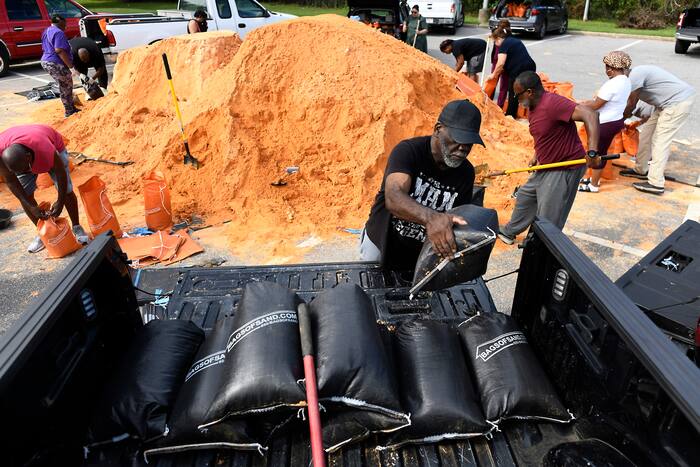
More than 594,000 customers in Florida and Alabama were without power Friday evening, according to poweroutage.com.
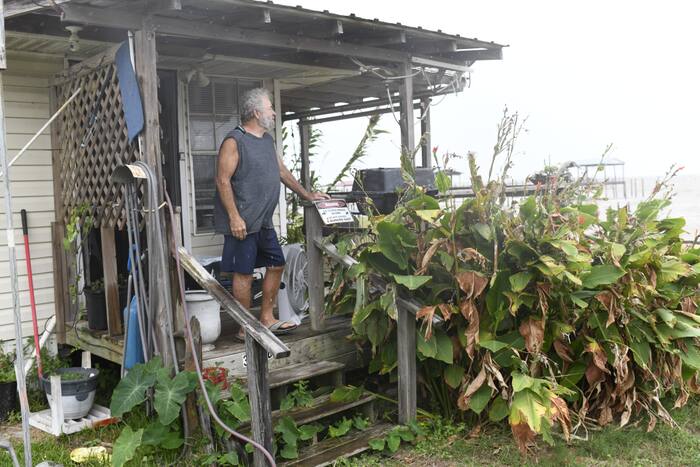
Many are braving Isaias at home
Tim Mowry, who rode out the storm from his home in Pensacola, said the wind was so intense it sounded like a train whistle as it whipped through a crack on his patio door. He lost power around 4:30 p.m. but was able to rely on a generator. There also was standing water in his backyard and parts of his fence were ripped down, but overall he said the storm wasn’t as bad as he expected.
“As far as Pensacola-wise we really got fortunate,” Mowry said.
Mowry said his son, who lives about 15 minutes away, tried to drive to his home after losing power but had to turn around because of downed trees and power lines blocking the roads.
One of the biggest concerns is a storm surge that could be as high as 6 to 9 feet (1.8 to 2.7 meters), according to the hurricane center. Places most at risk include Florida’s Pensacola Beach and the Gulf Islands National Seashore.
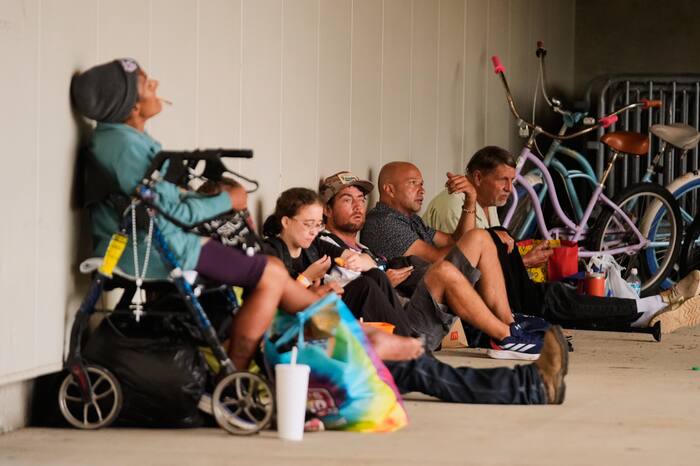
Dangerous conditions are expected throughout the western panhandle, southern Alabama and southern Mississippi, the National Hurricane Center said. Several counties announced mandatory evacuations while Mobile, Alabama, imposed a curfew through Saturday morning.
In a sign of how serious the warnings are, dozens of Waffle Houses in the Florida Panhandle were closed, according to the company’s website. The beloved Southern breakfast chain is known for staying open through severe weather and often is a measuring stick of a storm’s severity.
Kelsei Frazier, a Florida native living in Pace who is no stranger to hurricanes, knows all about the Waffle House Index.
“We joke because if Waffle House is still open, then you know it’s not a bad hurricane, but all the Waffle Houses that I know of within at least a normal range from us are closed,” said Frazier.
DeSantis warned residents to expect power outages, gasoline shortages and closures of bridges and highways.
The state’s National Guard deployed about 5,000 soldiers and airmen to help with the response, and search and rescue teams were ready to respond, while some prisons evacuated inmates.
The whole region could get soaked
Isaias was already slowing down after it reached land, and it was expected to weaken further and be downgraded to a tropical storm by Saturday afternoon, the center said.
Still, heavy rain is forecast as it moves inland, with 4 to 8 inches (10 to 20 centimeters) or even more expected through the weekend from southern Alabama to southwestern Georgia.
Isaias, which is the first hurricane to hit the eastern U.S. since Milton tore up the Gulf Coast of Florida in 2024, also is expected to bring heavy rain and potential flooding to much of the Southeast over the weekend, and then to parts of the Midwest and Northeast into Monday.
Isaias grounds flights but likely to miss oil hubs
The storm grounded most Friday flights at several panhandle airports, including all flights into and out of Destin-Fort Walton Beach Airport. President Donald Trump, meanwhile, scrapped his plans to attend Saturday’s football game between the University of Georgia and the University of Alabama in Tuscaloosa. He said he didn’t want to disrupt the emergency response.
Isaias was expected to miss the oil industry’s biggest hubs along the Gulf Coast, but fuel prices could rise if power outages shut down refineries for processing crude, industry experts said.
On Dauphin Island, a barrier island off the Alabama coast, Mayor Jeff Collier said he didn’t expect major damage, “but at the same time, these things are very fickle and a little jog here or there, or some last-minute increase in strength — we just have to be prepared for the worst.”
Meanwhile in the Pacific, Hurricane Simon became a Category 2 storm on Friday and was expected to strengthen further before making landfall in Mexico this weekend.
Tropical Storm Rachel was also expected to bring heavy winds and rain to northern Mexico and Southern California over the weekend.
___
Megnien reported from Panama City, Florida, and Seewer reported from Toledo, Ohio. Seth Borenstein and Collin Binkley in Washington; Rio Yamat in Las Vegas; Gerald Herbert in Pensacola, Florida; Dave Collins in Hartford, Connecticut; Sarah Raza in Sioux Falls, South Dakota; Kim Chandler in Montgomery, Alabama; Laura Turbay in Little Rock, Arkansas; and Hallie Golden in Seattle contributed to this report.