No Law Isn’t Just A Cyberpunk FPS, It’s An Incredibly Detailed Immersive Sim Too
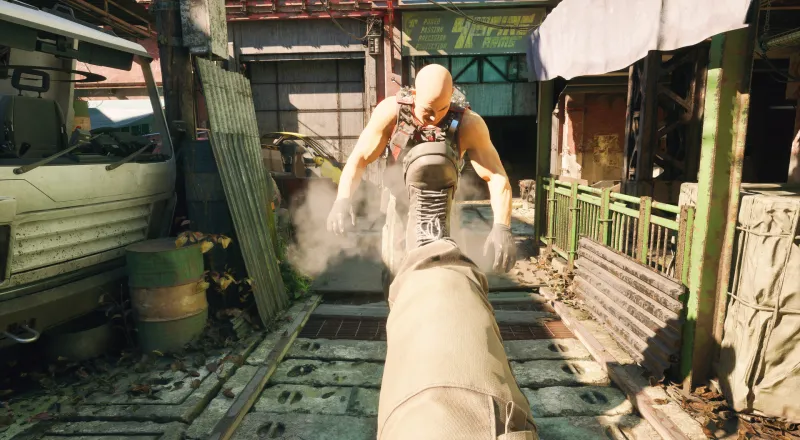
Platform:
PlayStation 5, Xbox Series X/S, PC
Publisher:
Krafton
Developer:
Neon Giant
Release:
2027
I’m a mark for cyberpunk games, so Neon Giant didn’t have to do much to sell me on No Law – you give me neon, corporate dystopia, and some inspired fashion choices, and I’m there. But I won’t deny that my initial impression of No Law when it was revealed during The Game Awards 2025 last December was something along the lines of a tepid “Oh cool, another cyberpunk game I’ll check out.” That impression stuck through every trailer Neon Giant and publisher Krafton released, including the latest shown during Gamescom Opening Night Light 2026 last week. However, I knew I had a preview of the game locked in for Gamescom and was looking forward to learning more.
With that preview behind me, my impression has changed to something along the lines of, “Holy hell, this is so. much. more. than a cyberpunk FPS.” Though I don’t get to play it, the gameplay I watch, courtesy of Neon Giant co-founder and No Law co-creative director Tor Frick (with commentary from co-founder and co-creative director Arcade Berg), greatly impresses me – it might be my game of the show, and is certainly one of my most anticipated releases of 2027 now.
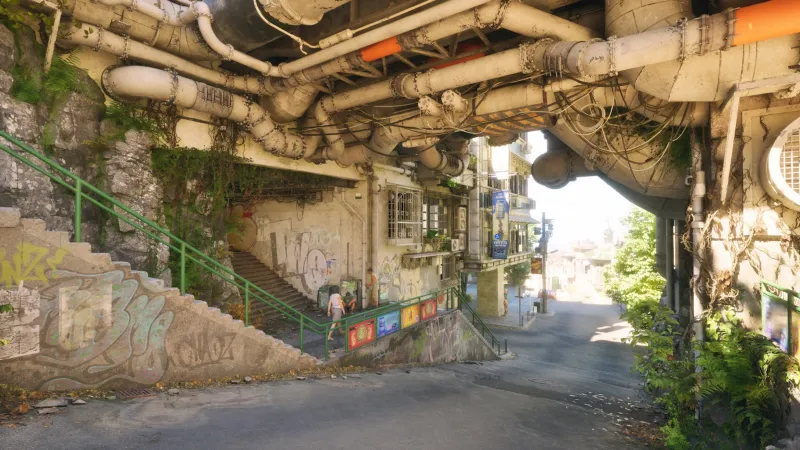
No Law takes place in the dense, Mediterranean-inspired Port Desire, with protagonist Gardener brought out of retirement to get something taken from him back; it’s very John Wick, and though Gardener is more of a 1980s action movie hero than Keanu Reeves’ assassin, I imagine their personalities would mesh well. Port Desire is a lawless city, as the game’s name implies, completely unregulated by government, making it a great place for criminal activity (that also happens to benefit corporations and neighboring nations). As a result, it’s the site of shady science experiments, black-market weapon development, and crime, though government-backed Peacekeepers stop too much chaos from occurring.
“They don’t want it to be perfect and safe; they want it to have a bit of chaos and violence,” Berg said. “Port Desire is Las Vegas on steroids.” He tells me people even travel to the city for leisure and vacation, as well, “because it can provide absolutely anything and there’s nothing anyone can do about it.”
Our demo begins shortly after the game’s intro, with Gardener searching for an informant. As we head out of our apartment and into the city proper, we stop to talk to Rosco, an NPC friend of Gardener, first. Here, I see how speaking to characters can yield Gardener information he can use later, but these conversations are optional, Berg says. “The story of the game is very simple: it’s a revenge story about retrieving your thing,” he tells me. “That’s all you need to know to shoot people in the face, but it’s opt-in. If you want a simpler shooting experience, we’ve got you covered; if you want an immersive sim, that’s there, too.”
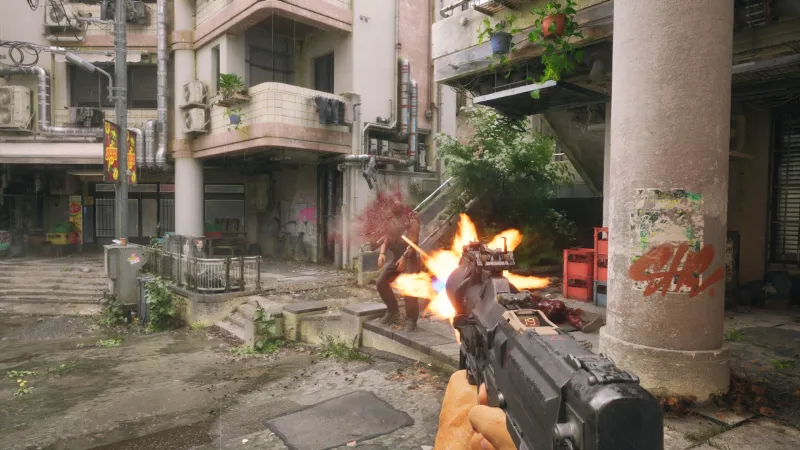
My ears perk up when he says “immersive sim” because I had no idea Neon Giant was taking No Law in that direction. It colors the conversations we have throughout the rest of this preview. Port Desire has a dynamic weather system, and if you need to enter a heavily guarded place, Frick says it might be smart to wait for it to rain – like real people, NPCs in this game don’t want to be outside stuck in the rain, and entering a secure compound is much easier when all of its security is inside. Nighttime and daytime play into this experience as well, from simpler features, like shops closing at night (making it harder to stock up on goods) to NPCs crawling into bed for the night (making it easier to kill a target).
As we walk around Port Desire, it feels alive, and I know that’s a blasé and cliché thing to say these days, but people have working habits, routes, and more. I see mechanics working on cars, sparks flying from their tools; I see a barista making coffee and serving it to patrons at tables; I see construction workers wearing VR headsets, controlling drones that repair a nearby storefront façade. Berg shows me that every street has an associated street sign, and that buildings have addresses, too; if you choose to turn on a special “immersive mode,” you’ll be required to use this information to get around. If you don’t opt in to that mode, however, a standard video game waypoint will help you get where you need to go.
“You can never play the game wrong – that’s our core tenet,” Berg says. “It’s all up to you how you experience stuff.”
Before heading to the informant’s location, we stop into a shop. Frick and Berg are delighted to show me that every item on the store’s shelves is hand-crafted, from the packaging to the logo to the on-item text and even the ingredients. We stock up on some healing items and bring them to the clerk to check out; if we walked out with these goods instead, we’d be committing theft, and the clerk (and maybe Peacekeepers) would likely be out to kill us. As we exit the store, Frick points out the anti-theft device near the shop’s doors. We later return to this store and steal the device to combine it with a grenade, creating a proximity grenade. They tell me there are all kinds of combo interactions like this to create new weapons, items, and more.
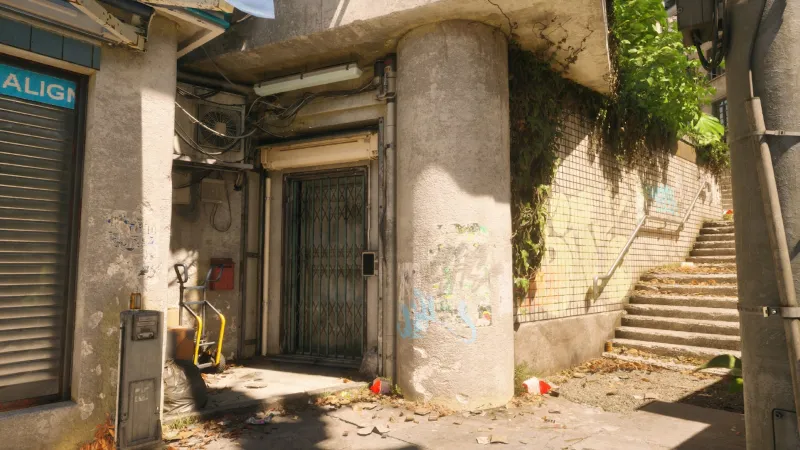
As we make our way to the informant’s location, we head through an area overtaken by nature. Berg says nature is trying to take the city back and is more aggressive in this sunny-than-most-cyberpunk-games climate. Workers in the city can be spotted using chemicals to fight back against the greenery’s growth.
We head underground, and the bright sun of Port Desire disappears, surrounding us in shadows. It’s clear things are much shadier, literally and figuratively, down here, and the NPCs here match the vibe. We head into an apartment building at the behest of Tenna, the voice in our ear. Side note: I suspect Tenna’s VO is a placeholder; otherwise, Neon Giant should consider some changes, because the performance sticks out like a sore thumb.
We could just barge in and kill everyone here. We could also climb the fence and sneak in, and Frick shows how you can stack nearby crates so that you can actually do so before joking that QA has stacked enough crates to climb three stories into an open window. “If it looks possible, it probably is,” Berg adds. The two explain that No Law is Neon Giant’s first immersive sim but that The Ascent had elements of the genre, too. It’s only natural for this team, he adds, with experience on games like Far Cry, Crysis, Chronicles of Riddick, and more in their employees’ tenures.
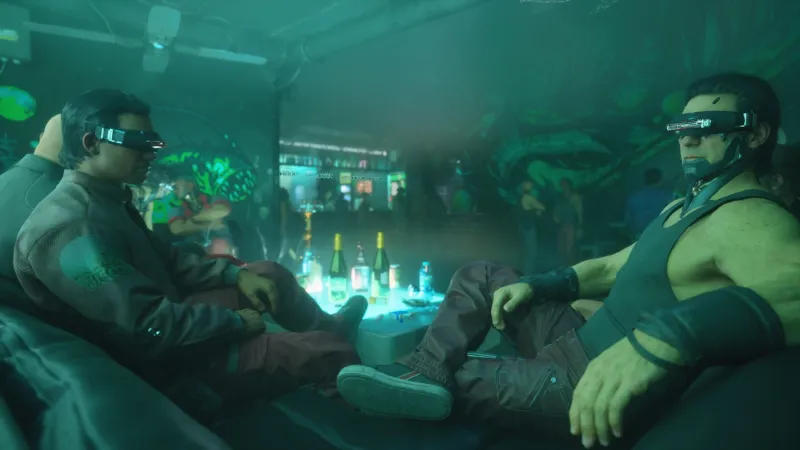
Once inside the apartment building, the landlord Renn, inspired by organized crime in 1960s NYC and associated film noirs (with the attitude and accent making that clear), stops us from entering. We could kill him, but instead, we search a nearby room to find a document with a secret password that gets us in.
Something interesting I learn here is that you only earn XP in No Law from completing objectives. You get XP for reaching the informant’s room, regardless of how you do it. “We always reward the ‘what,’ but never the ‘how,'” Berg says. “If I gave you XP for lockpicking [which we do to enter the room with the password], you’ll start lockpicking everywhere. The same with headshots – we don’t even give you XP for shooting enemies because you could sneak around them instead.”
We eventually reach the informant’s room, but nobody’s there, so we search around like a detective. We search his computer and discover he’s en route to a secret meeting. However, his email details three possible meeting spots in conversation with whomever he’s linking up with, each with different levels of security.
We head to the least secure location, presumably meaning fewer watchful eyes, which is an underground tunnel. Unfortunately, my preview ends before we actually reach the informant, and I use the rest of the preview time to learn more about the game.
Berg tells me Neon Giant has doubled its employee count, up from 12 in 2021’s The Ascent to 24 today; the number blows my mind, considering what I just watched seems like a project made by 300 people. He also tells me the story is completely nonlinear, and you could theoretically complete it almost passively, though you will have to kill a few people by necessity because “it’s a revenge story, after all.” You will get different endings based on how you impact the world with your actions and the choices you make, and Berg and co. are excited to see where players land.
Crucially, they say it’s impossible to unlock every skill and have every conversation in one playthrough. “We’re a small team and making content takes time and costs money, but we are okay with players not experiencing content,” Berg says. “We just want players to roll credits and say, ‘Damn, what a good game,’ but know that there’s more in the game left for them.”
That said, Berg stresses the team is emphasizing the “first playthrough” experience and not necessarily asking players to replay the game and discover everything. “It’s not about replayability, though that’s there,” he tells me. “It’s about making that first playthrough feel significant and know it’s yours while knowing the city and the story are more than what you saw.”
Everything I’ve seen about No Law prior to this preview told me it’s going to be a fine cyberpunk game I’ll check out; this preview has greatly increased my expectations and excitement. Neon Giant clearly loves this sci-fi genre, and they love immersive sims (and FPS games, too). I look forward to seeing the rest of it on full display next year.
No Law is due out sometime in 2027 on PlayStation 5, Xbox Series X/S, and PC via Steam and the Epic Games Store.
For more, check out our interview with Neon Giant about No Law from earlier this year. After that, read Game Informer’s review of The Ascent.