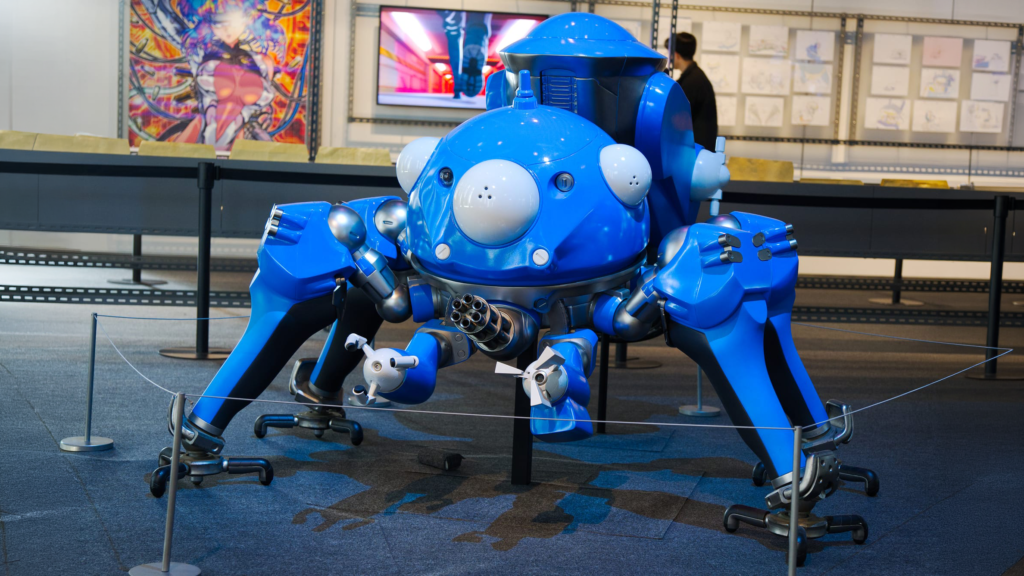
The setting and imagery of Ghost in the Shell is iconic by this point.
A futuristic, dystopian society where AI and cybernetic technology have transformed society into a militarized, oppressive surveillance state where the border between humanity and machine is blurred. The title, even, refers to the idea that a soul (‘the ghost’) could be uploaded and transferred into a mechanical shell, or flesh could be fused to transform the human. It’s an idea that has been used to comment on humanity’s relationship with technology, and, to mark thirty years since the first anime adaptation of the 1989 manga, a new art exhibition celebrating the franchise in its entirety has hit Tokyo.
But this isn’t any normal exhibition. It makes sense that a franchise speculating about the future of technology would implement the cutting-edge aspects of this technology into even a showcase of the human artistry that went into its creation, but this Ghost in the Shell Exhibition has implemented AR technology using Xreal Air 2 Ultra to enhance the experience of exploring and understanding the artwork on display.
The series in every iteration follows members of Public Security Section 9, professionals separate to the police that work at solving and preventing crime, typically with a cybercrime and counter-terrorist purpose. The crimes they encounter, and the personal stories that reverberate into the broader world, touch on corruption, surveillance, technological overreach and abuse and more. The Puppet Master, the antagonist of the original manga and first film, can hack and overtake cybernetic bodies, whereas the Laughing Man circumvents surveillance through hacked video feeds.
Conceptually, this is the first deep dive into the history of the entire franchise in a single exhibition, showcasing materials used in the production of not just early works but every series and film from the 1995 original all the way until the more recent Netflix-produced CG works, Arise, and an all-new preview for the all-new series from Science Saru premiering later this year. As such, original cels, storyboards, sketches and production materials from every series were on display, alongside newly produced artworks from a range of creatives that explore questions on humanity, AI, technology and the human body posed by the franchise. An analog look at a technological world, as original paper sketches are framed on walls and in glass panels.
In an opening room, you also have tall PCs with a digital interface to witness lines of dialogue, sketches, hear music, and more from across the franchise. In the main gallery featuring art from every series also sits a PC with digitized assets from every series to flick through at your leisure, a hard drive with a treasure trove of materials from the dense work of the series. Then you have the Xreal Air 2 Ultra AR device.
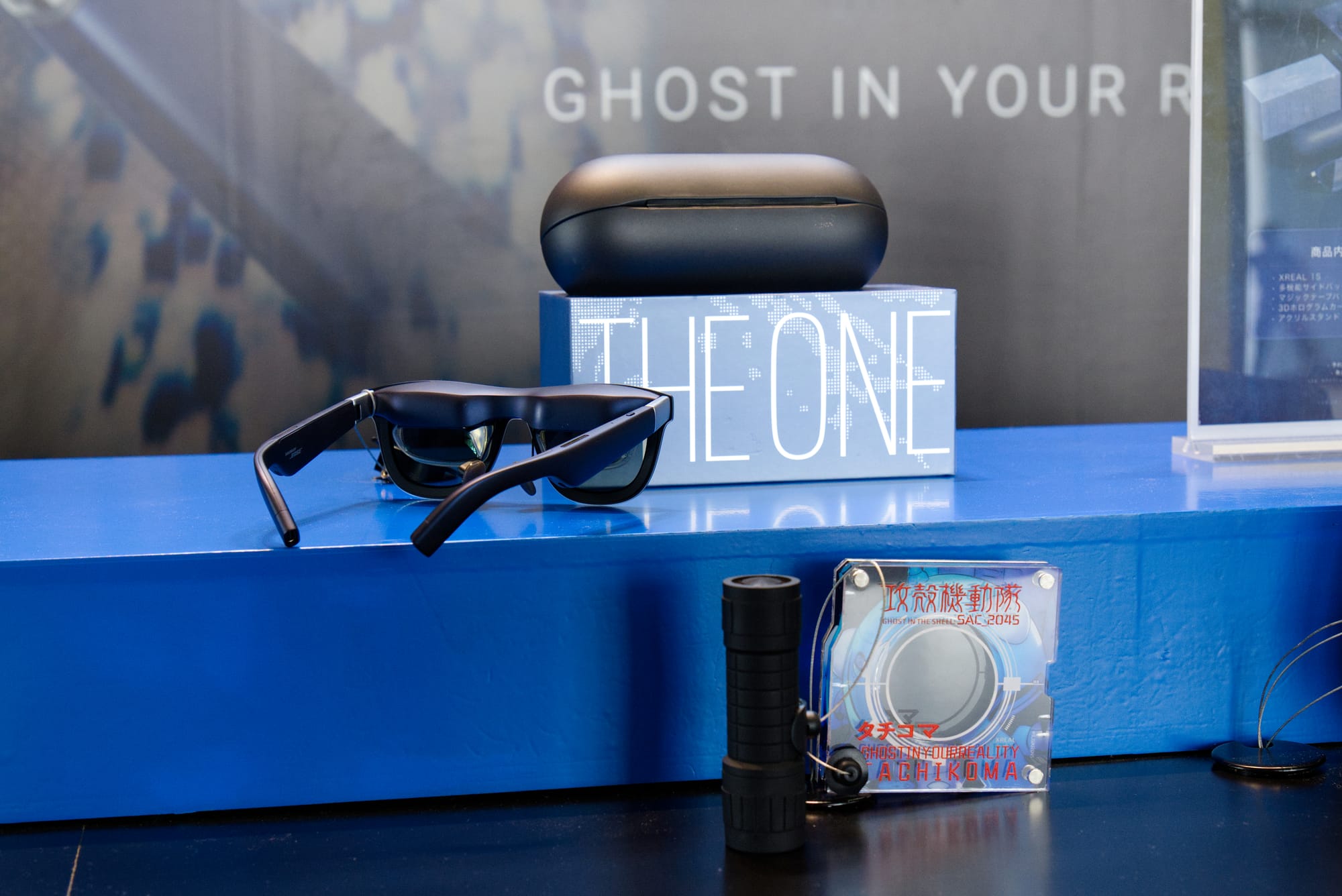
Their implementation at this exhibition is certainly unusual, one of the first examples in the world of AR glasses being used at an art exhibition in such a manner. While you could simplify their use as a more thematically fitting audio guide like the listening devices available to rent at museums around the world, their use here was a bit more involved and interesting than such a simplistic summation. For a cost of 1500 yen ($10) on top of your ticket, you will be given a pair of Xreal Air 2 Ultra glasses and a smartphone in a case to hold around your neck. After plugging the glasses into the phone, selecting your language between Japanese and English, and being instructed on how to use the device for the first time, you enter the exhibition.
Dotted around the floor of every room of the exhibition are special marks featuring Tachikoma, the cute blue robot from the series. Scanning these marks will trigger an AR scene superimposed over that room or area of the exhibition. The first marker, serving as an introduction to this enhanced walkthrough of the space, places Tachikoma inside the open-plan first room of the showcase in order to explain the franchise and the exhibition, featuring the machine voiced by its original voice actor, Sakiko Tamagawa.
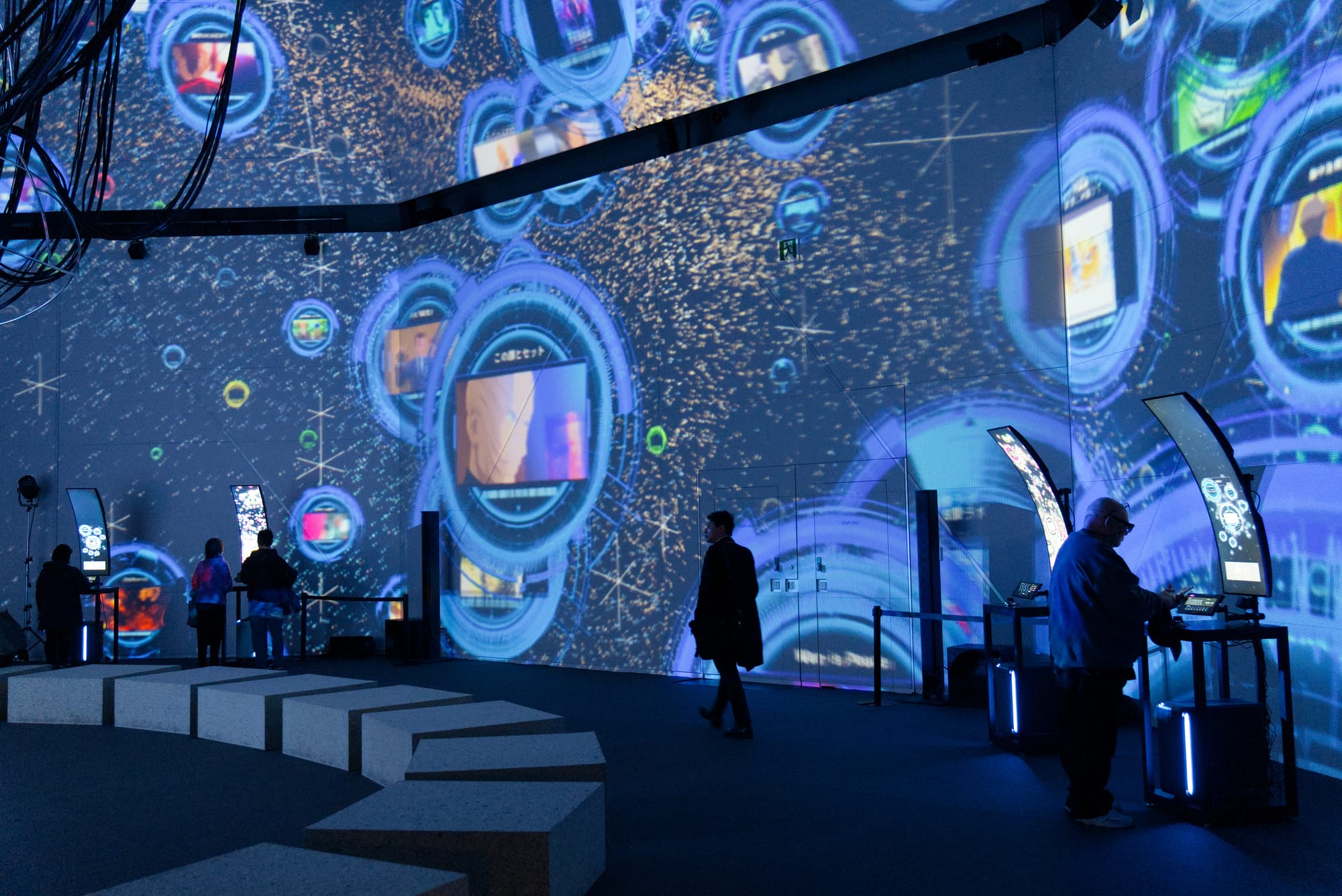
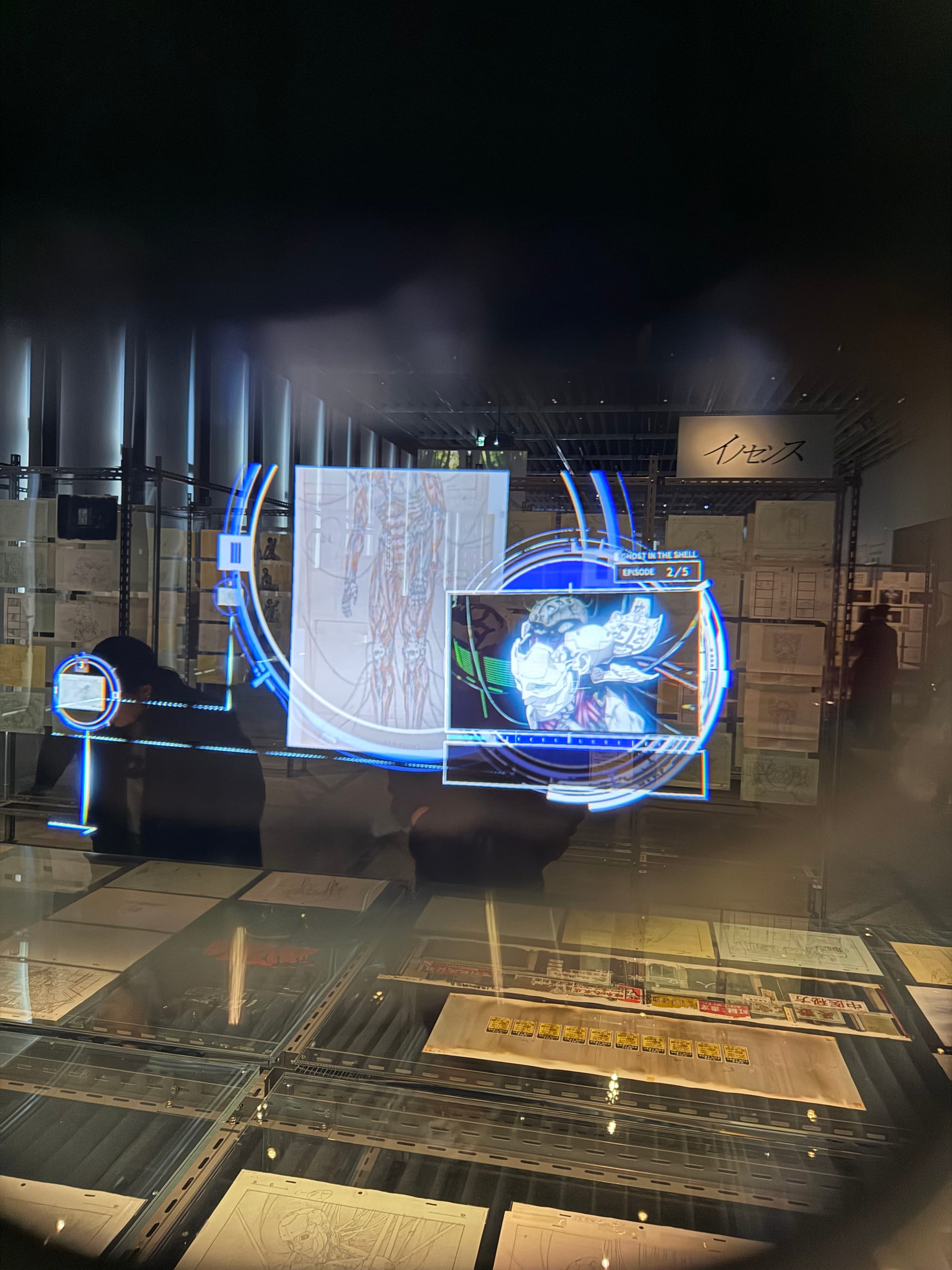
These AR markings are primarily found in the next room, the main gallery space and centerpiece of the exhibition featuring original production sketches, cels and more each broken up by series or film. At the beginning of each entry in the franchise’s space within the showcase sits a large Tachikoma mark that you scan with the Xreal glasses, letting them know where you are in the space and triggering the enhancements related to that entry. Each begins with an introduction to that work by Tachikoma enhanced by video clips and audio from that movie or series, before light paths appear on the floor guiding you to specific sketches and cels on display on the show floor.
Scanning these will not only work as a story-driven run-through of the story of that particular production, but provide production background and context to the work you’re seeing.
While functionally similar to an audio guide, the format using this technology allows this guide to go further in expanding upon what visitors can understand about each piece on display. Highlighting specific works and providing overlaid video places these sketches within the context of the finished work for those less familiar with the animation production process, which can be eye-opening for anyone unaware of everything that goes into taking a work from page to screen.
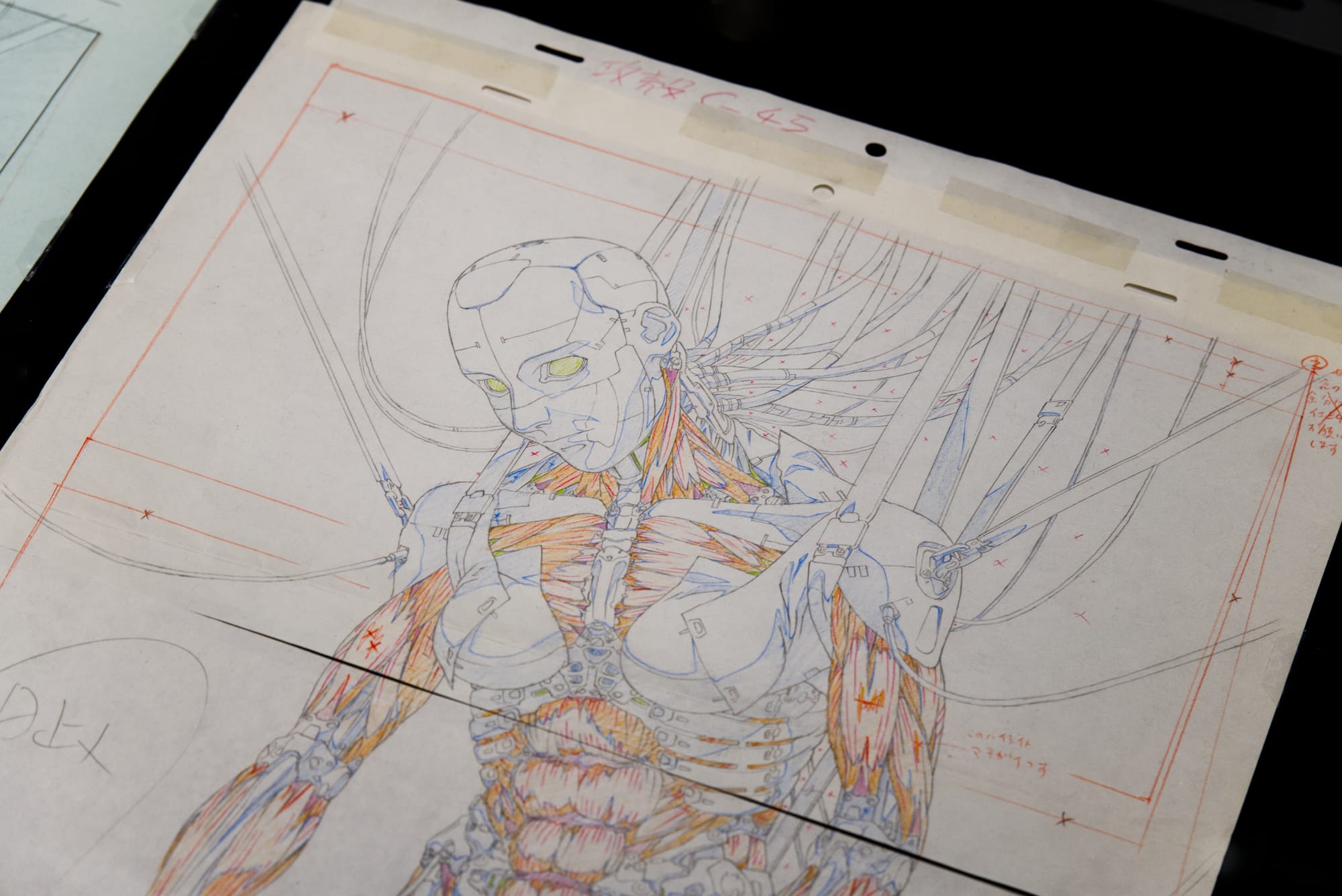
Of course, it doesn’t do this for every sketch, but it’s easily possible to wander the floor and look at these assets at your own pace, then scan these enhanced works at any moment. Newly produced artworks are placed alongside these original production materials that each lean into the themes of the series, leaving you with fresh perspectives to ponder as you bask in the world of Ghost in the Shell. One that particularly stood out to me was a human-sized doll in a box with a mirror for a face, reflecting the viewer as they stared at the piece. When humanity can be moved into a new shell to the point the flesh is unimportant, what is a body? What is human?
Considering the warnings the franchise has made about the convergence of technology and humanity in the wake of the potentially ruinous consequences of AI or technological overabundance, all while still recognizing the potential of these advancements, these artworks and even the use of Xreal glasses felt fitting. Innocence, the second film by Mamoru Oshii, specifically dives into the AI question at some depth, which coincidentally is where this doll artwork was positioned in the event space.
Not all of these art pieces and technology-infused additions to the showcase felt fitting – moving from the warnings of Innocence regarding AI to the uncritical embrace of the technology via distorted Generative AI artwork was disappointing to witness in an exhibition celebrating human creativity. But most of these artworks and technological experiments enhanced the experience overall.
After viewing every series and film in order, the Xreal experience ends with an exclusive preview of Science Saru’s new series, alongside a brief original 30-second animation featuring Motoko evoking the imagery of the original film. Beyond the glasses implementation, the merchandise area featured collaborations with numerous artists and companies that also merged traditional methods with technological innovation. STYLY, an AR company, produced a fascinating traditional Japanese folding screen that, when scanned with your phone’s camera, would render an animation of Motoko.
An embrace of technology to enhance the artistic display of 30 years of adaptations for this seminal manga series felt befitting of this unique exhibition, but the technological potential of this work goes far beyond Ghost in the Shell. The use of Xreal glasses here wasn’t perfect, but any issues spoke more to the current limits of the technology than their implementation here. The field of view is still relatively limited with notable edges, and they’re difficult to use when also wearing glasses. They could occasionally desync, especially if you removed them from your face for any reason, and if this occurs the resync process is far from simple due to how locked-down these devices are for security reasons during this exhibition.
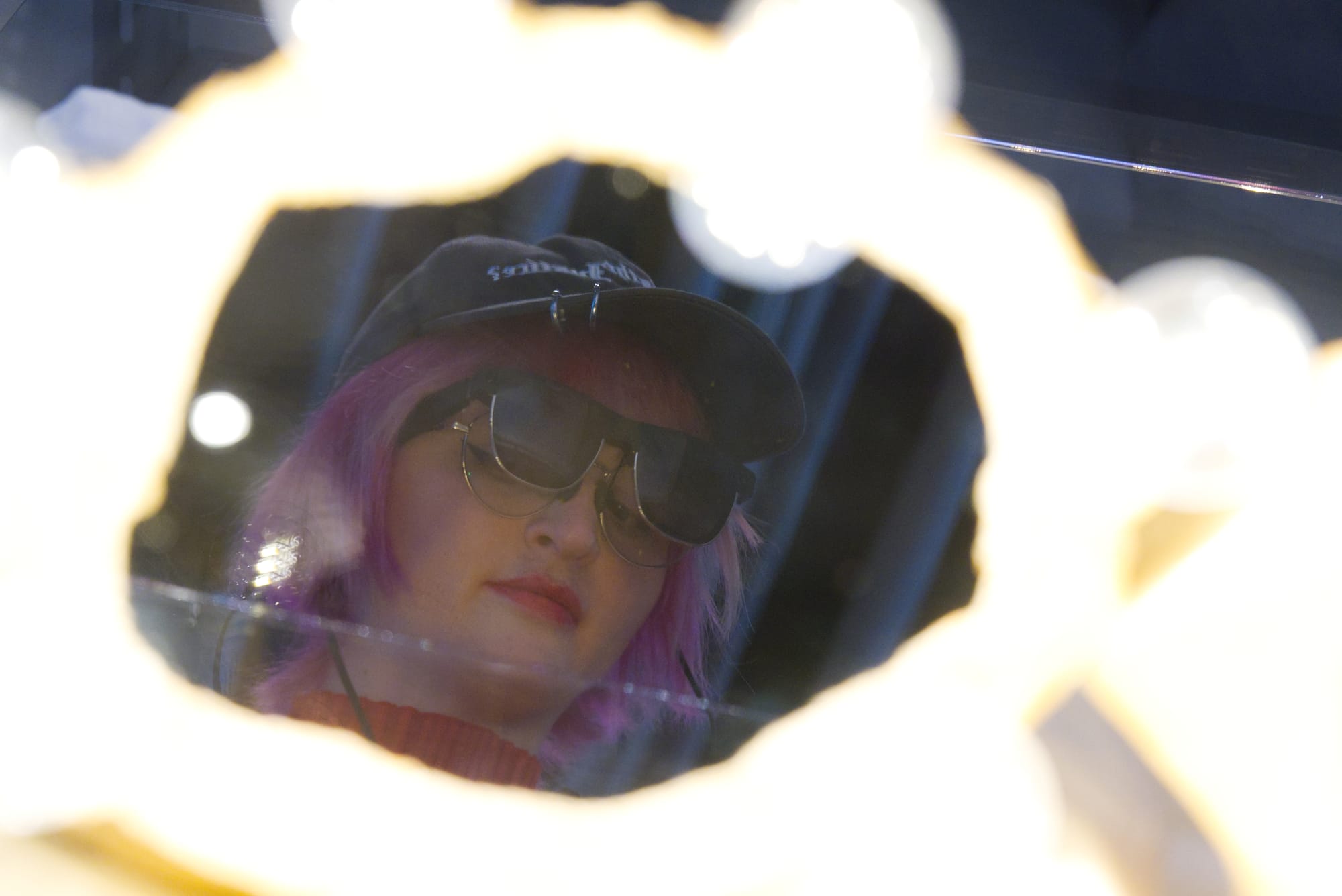
Still, I could imagine this technology finding great use in other showcases in future, even beyond ones where it’s thematically apt to use them like seen here. Classic museums have already embraced technology to provide context to artworks in the past: the Louvre used 3DS devices for a decade, and phone apps are commonplace. AR glasses give a visual enhancement not possible with a phone, however, making it an enhancing use-case for the technology which genuinely benefits the experience.
Regardless of if you do choose to rent the glasses, however, the Ghost in the Shell exhibition is more than worth your time if you care for the series. If you live in or visit Tokyo, the rare opportunity to see original sketches and cels from the franchise history is a real treat. The exhibition runs at Tokyo Node until April 5th.


![Good Morning [Employee Name] VR Trailer Hints At An Unsettling Office Mystery](https://www.spursfancave.com/wp-content/uploads/2026/10/good-morning-employee-name-vr-trailer-hints-at-an-unsettling-office-mystery-632x356.jpg)